
The night that froze time
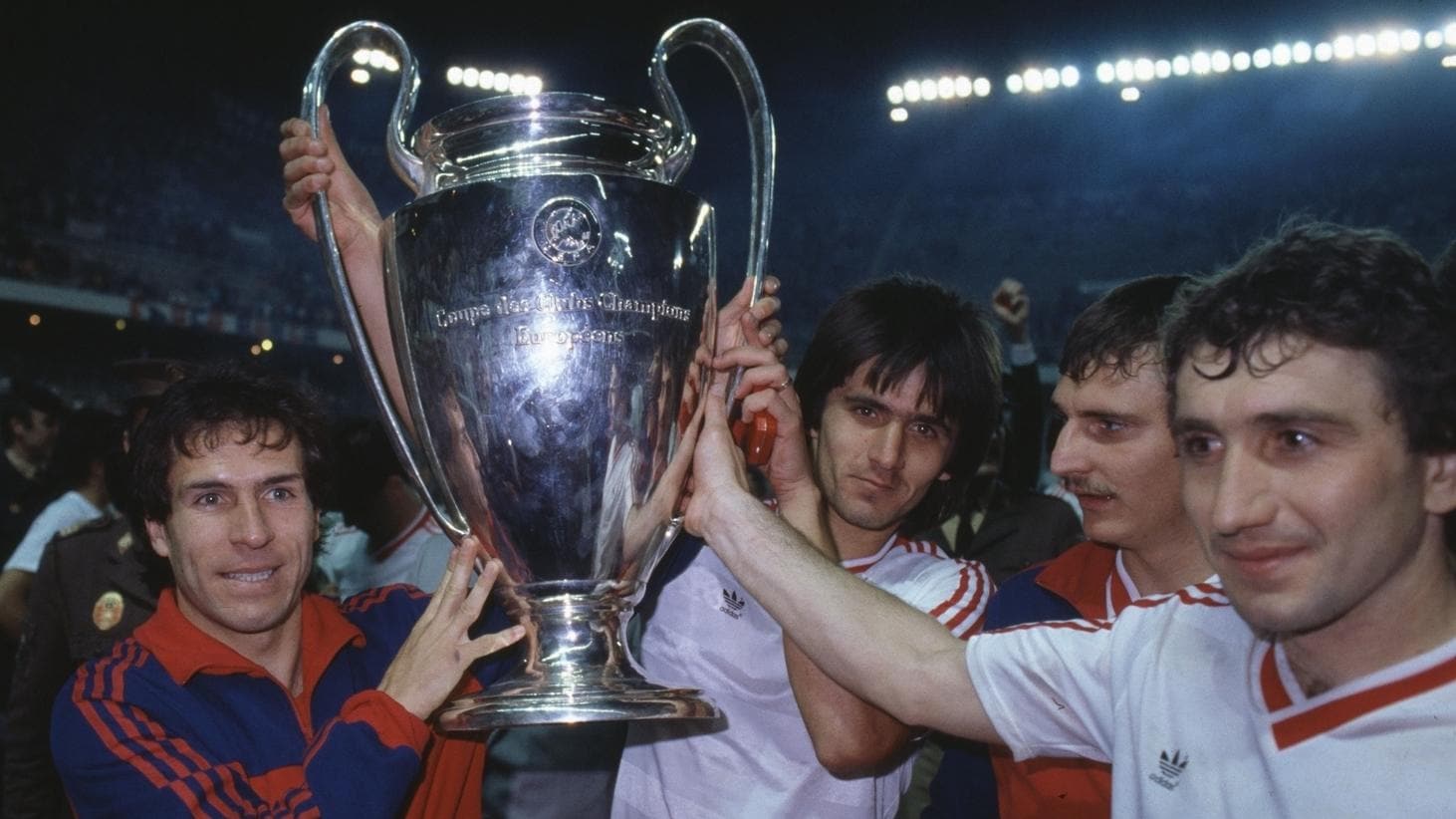
On 7 May 1986, Steaua Bucharest defeated FC Barcelona in the European Cup final in Seville. Helmuth Duckadam saved four penalties. Marius Lăcătuș, Gavril Balint, Ștefan Iovan, and Victor Pițurcă became European champions. For Romanian football, and for a club backed by the army, it was a night that felt definitive. What followed, however, was not a long European reign but a complicated, constricted afterlife shaped by politics, isolation, and a game that was already moving away from them.
Domestic dominance without escape
In the immediate aftermath, Steaua remained overwhelmingly strong at home. The Liga I titles kept coming, often by large margins, with squads still anchored by Lăcătuș, Balint, and Iovan. Rivals such as Dinamo Bucharest and Universitatea Craiova struggled to keep pace. Yet domestic dominance concealed a deeper problem. Romanian clubs were locked behind borders. Players could not leave freely. Wages were controlled. Success did not translate into renewal. Steaua were strong because the system allowed them to be strong, not because they could evolve.
European respect, shrinking margins
Steaua returned to European finals in 1989, losing to Arrigo Sacchi’s AC Milan in Barcelona. That match, more than Seville, revealed the future. Milan’s pressing, depth, and tactical clarity exposed the limits of a Romanian side built on continuity rather than adaptation. Steaua still eliminated clubs like IFK Göteborg and Spartak Moscow, but the margins narrowed. The European Cup was becoming faster, richer, and more international. Steaua were standing still.
The end of enforced continuity
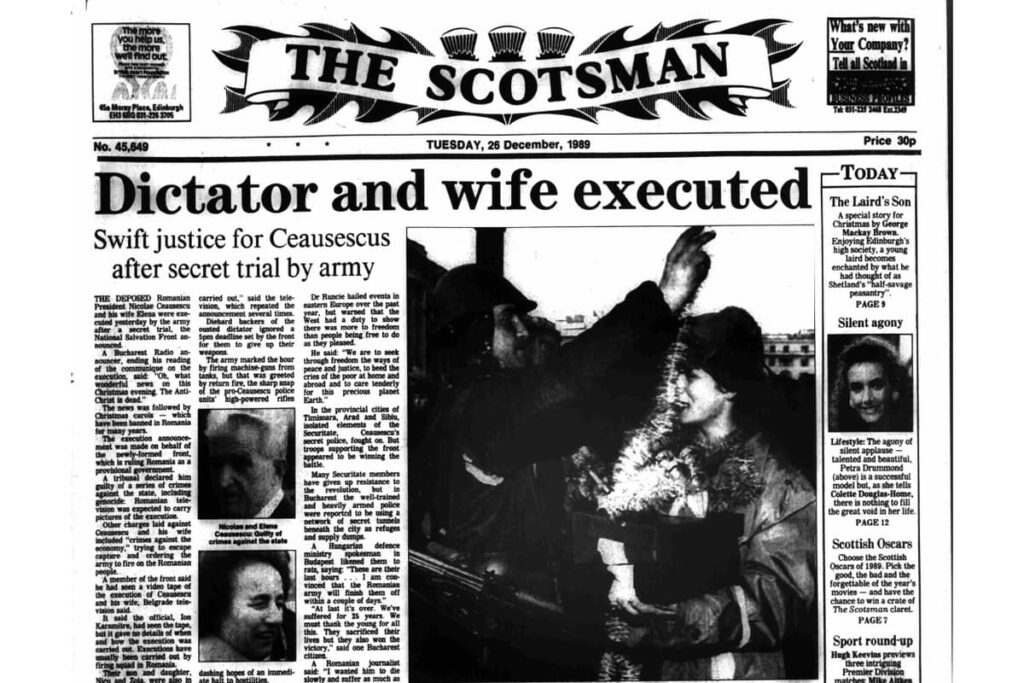
The Romanian Revolution of 1989 ended Nicolae Ceaușescu’s regime and dismantled the structures that had sustained Steaua’s squad. Almost overnight, the continuity that defined the club evaporated. Lăcătuș left for Fiorentina. Gheorghe Hagi, who had returned briefly from Real Madrid, departed again, this time for Brescia. Duckadam’s career had already faded due to health issues. The core that had made Steaua stable was gone, not replaced.
From institution to uncertainty
In the early 1990s, Steaua faced a problem common across Eastern Europe. The club had been an institution, not a market entity. Transition meant learning sponsorships, transfers, and contracts in a landscape already dominated by Western leagues. Romanian football lost talent quickly. Dan Petrescu left for Sheffield Wednesday. Ilie Dumitrescu moved to Tottenham Hotspur. Florin Răducioiu circulated through Bari, Verona, and Milan. Steaua could no longer retain, only export.
European nights without continuity
There were still moments. Quarter-finals in the Cup Winners’ Cup. Competitive ties against Rangers, Anderlecht, and Benfica. But each European campaign felt disconnected from the last. Squads changed rapidly. Managers rotated. Financial pressure dictated decisions. Steaua were present but no longer central. European football remembered them, but did not wait for them.
Identity under pressure
Perhaps the most damaging legacy of post-1986 life was identity erosion. During the army years, Steaua had clarity. They represented power, order, and state backing. In the 1990s and 2000s, that clarity dissolved. Ownership disputes emerged. The separation between CSA Steaua and FCSB fractured history itself. Titles were questioned. European trophies were litigated. A club that once symbolised certainty became an argument.
Living off the night
Supporters still reference Seville. Duckadam remains a mythic figure. The penalties are replayed endlessly. Yet the longer time passes, the heavier that night becomes. Instead of a foundation, 1986 turned into a ceiling. Every European campaign was framed by what Steaua no longer were. Few clubs carry their greatest moment as both shield and burden so visibly.
What remains
Steaua Bucharest after 1986 is not a story of failure. It is a story of timing. The club peaked at the exact moment when European football was about to transform beyond recognition. Political isolation delayed adaptation. Liberation arrived too late to preserve continuity. Steaua did not collapse. They drifted, carrying history that could not be replicated under new rules.
The European Cup still belongs to them. So does the silence that followed it.

 By
By
https://shorturl.fm/pUYXc
https://shorturl.fm/EK6np
https://shorturl.fm/uR2m9
https://shorturl.fm/uByuD
https://shorturl.fm/IVzoQ
https://shorturl.fm/MHchz