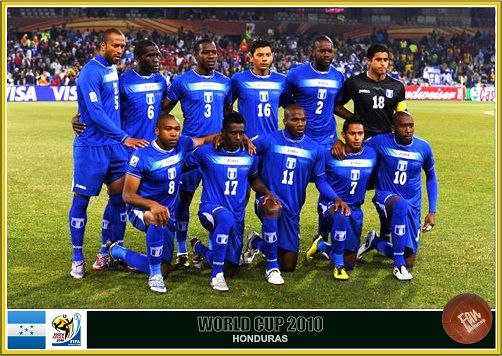

A nation that arrived early
Honduras qualified for its first World Cup in 1982, ahead of many neighbours with stronger reputations. The tournament in Spain is often remembered for results rather than performances, but Honduras were competitive. They drew 1–1 with Spain, held Northern Ireland, and lost narrowly to Yugoslavia. Players like Gilberto Yearwood, Antonio La Volpe’s contemporary Ramón Maradiaga, and goalkeeper Julio César Arzú gave the team credibility. Yet that early arrival created an expectation Honduras would struggle to meet for decades.
Domestic football without insulation
After 1982, Honduran football lacked the institutional protection needed to convert exposure into continuity. The Liga Nacional de Honduras produced competitive clubs such as Olimpia, Motagua, Real España, and Marathón, but financial margins were thin. Players left early for Costa Rica, Mexico, or the United States. Clubs rarely retained squads long enough to mature together. Unlike Mexico’s Primera División or Costa Rica’s increasingly professionalised system, Honduras remained vulnerable to disruption.
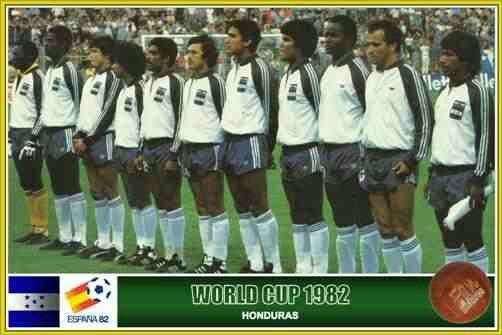
Regional competition as reality check
Between World Cups, Honduras measured itself through CONCACAF rather than FIFA tournaments. The CONCACAF Championship, later the Gold Cup, became both opportunity and limitation. Honduras won the 1981 championship, but subsequent editions exposed inconsistency. Strong runs were followed by early exits. Matches against Costa Rica, Mexico, and the United States defined progress more than global ambitions. Honduras were competitive, rarely dominant.
The club game as national substitute
With World Cups absent, domestic clubs carried international identity. Olimpia’s runs in the CONCACAF Champions’ Cup in the late 1980s and 1990s mattered deeply. Matches against Cruz Azul, América, and Saprissa were treated as proxies for international validation. Stadiums like Estadio Nacional Tiburcio Carías Andino became places where continental relevance felt possible, even if national qualification remained elusive.
Lost cycles and short memories
The 1990s were marked by near-misses. Honduras reached the final round of CONCACAF qualification for France 1998 but fell short behind Mexico and the United States. Players such as Carlos Pavón, Amado Guevara, and Milton Núñez represented a generation good enough to compete regionally but inconsistent over long qualifying cycles. Coaching changes were frequent. Long-term planning was rare.
The diaspora effect
Unlike some Central American nations, Honduras did not benefit early from a strong European or North American diaspora pipeline. Players moved abroad, but usually late and to mid-level leagues. Pavón found success in Italy with Udinese and Napoli. David Suazo’s later move to Cagliari and Inter would come after qualification was finally achieved again. Between World Cups, Honduras produced individuals rather than systems.
Political instability and football drift
Domestic instability affected football governance. Federation leadership changed often. Youth development programmes were inconsistent. Investment flowed unevenly. While football remained culturally important, it lacked political protection. This contrasted with Mexico’s centralised control or the United States’ long-term structural planning. Honduras existed in between: passionate, talented, but exposed.
The Gold Cup paradox
Honduras often performed better in tournament football than in qualifiers. Third-place finishes in the Gold Cup showed they could compete when momentum mattered. Yet World Cup qualification demanded consistency across hostile away matches in San José, Mexico City, and Columbus. Honduras struggled with depth, not belief. The gap was logistical and structural, not emotional.
Support without reward
Supporter culture did not fade between World Cups. Matches against El Salvador and Costa Rica still carried historic weight. Club rivalries between Olimpia and Motagua remained intense. Football mattered regardless of qualification. This sustained relevance masked the frustration of absence. Honduras were never forgotten by their supporters, even when FIFA forgot them.
Breaking the cycle
When Honduras finally returned to the World Cup in 2010, it felt less like a breakthrough than an overdue correction. The intervening decades had not been empty; they were formative. Players like Guevara, Pavón, and Suazo bridged eras. Clubs learned to survive without stability. The federation learned, slowly, that endurance alone was not enough.
What the gap reveals
Honduras between World Cups is not a story of failure. It is a story of a football nation living permanently in qualification mode, defined by proximity rather than presence. The absence shaped identity. It sharpened rivalries. It forced reliance on clubs and regional tournaments. When Honduras returned to the global stage, they did so carrying decades of unfulfilled expectation.
Between World Cups, Honduran football learned how to wait without disappearing.

 By
By
https://shorturl.fm/KjgJW
https://shorturl.fm/NQR1C
https://shorturl.fm/1xiTy
https://shorturl.fm/HjZEu
https://shorturl.fm/t3xdW
https://shorturl.fm/LX7UA
https://shorturl.fm/5UmFm
https://shorturl.fm/cEB21
https://shorturl.fm/7eUWc
https://shorturl.fm/kj7vm
https://shorturl.fm/qYvQK
https://shorturl.fm/TD5y2
https://shorturl.fm/kOq8m
https://shorturl.fm/FEHZ2
https://shorturl.fm/mH2nq
https://shorturl.fm/iD6L2
https://shorturl.fm/5BwEk
https://shorturl.fm/VpKXZ
https://shorturl.fm/U2ef9
https://shorturl.fm/nIc1V
https://shorturl.fm/4dyma
https://shorturl.fm/y0pMi
https://shorturl.fm/Qevci
https://shorturl.fm/nPwQf
https://shorturl.fm/Nl7EW
https://shorturl.fm/S9Ges
https://shorturl.fm/mZ2OC
https://shorturl.fm/lklWW
https://shorturl.fm/p6Rsw
https://shorturl.fm/0VIYC
https://shorturl.fm/Hr7V3
https://shorturl.fm/5H5VO
https://shorturl.fm/NO55p
https://shorturl.fm/M90b2
https://shorturl.fm/XbMw1
https://shorturl.fm/unXEg
https://shorturl.fm/Afwdy
https://shorturl.fm/eqKGn
https://shorturl.fm/oWCzX
https://shorturl.fm/0xVBA
https://shorturl.fm/9sEOb
https://shorturl.fm/x5JSy
https://shorturl.fm/0c2Y7
https://shorturl.fm/OgpMJ
https://shorturl.fm/kbWjP
https://shorturl.fm/t2vR6
https://shorturl.fm/WRlth
https://shorturl.fm/w9b6Y
https://shorturl.fm/mEqv1
https://shorturl.fm/DIIhH
https://shorturl.fm/HKM6U
https://shorturl.fm/DLtke
https://shorturl.fm/7GcsY
https://shorturl.fm/JWPfb
https://shorturl.fm/sShef
https://shorturl.fm/G135o
https://shorturl.fm/oTVEp
https://shorturl.fm/mNMj1
https://shorturl.fm/81xMz
I blog frequently and I genuinely thank you for your content. This article has truly peaked my interest. I’m going to book mark your website and keep checking for new details about once a week. I subscribed to your RSS feed as well.
在线购买大麻用于XXX成人色情视频
I take pleasure in, result in I found just what I was taking a look for. You have ended my four day long hunt! God Bless you man. Have a great day. Bye
new online casino slot games bad
It’s amazing to pay a quick visit this site and reading the views of all friends concerning this article, while I am also zealous of getting knowledge.
best real money online casino slots
Pretty portion of content. I simply stumbled upon your site and in accession capital to assert that I get in fact enjoyed account your blog posts. Anyway I will be subscribing to your augment and even I achievement you access persistently quickly.
Xxx video onlyfans sex video site
Hello there! This post couldn’t be written any better! Reading through this post reminds me of my previous room mate! He always kept chatting about this. I will forward this write-up to him. Fairly certain he will have a good read. Thank you for sharing!
在线购买大麻用于XXX成人色情视频
you’re truly a good webmaster. The website loading pace is incredible. It sort of feels that you are doing any unique trick. Also, The contents are masterwork. you have performed a excellent activity in this topic!
在线购买大麻用于XXX成人色情视频
https://shorturl.fm/IDPtA
Attractive section of content. I just stumbled upon your blog and in accession capital to assert that I get in fact enjoyed account your blog posts. Anyway I will be subscribing to your feeds and even I achievement you access consistently fast.
kasiino tervitusboonus
https://shorturl.fm/PLanZ
Heya! I’m at work browsing your blog from my new apple iphone! Just wanted to say I love reading through your blog and look forward to all your posts! Keep up the great work!
online casino ohne oasis schnelle auszahlung
https://shorturl.fm/Obyo6
https://shorturl.fm/mUCLq
https://shorturl.fm/ElJIv
https://shorturl.fm/OIP4s
https://shorturl.fm/mEpXm
https://shorturl.fm/MwmwX
https://shorturl.fm/bUojq
https://shorturl.fm/Rrik6
https://shorturl.fm/ftu7s
https://shorturl.fm/Qh2rN
https://shorturl.fm/Hmxkh
https://shorturl.fm/xZaZJ
https://shorturl.fm/Sa5nu
https://shorturl.fm/RYRS5
https://shorturl.fm/aLiQd
https://shorturl.fm/VmlYs
https://shorturl.fm/SBRmn
https://shorturl.fm/UKL1Y
https://shorturl.fm/6YT38
https://shorturl.fm/71Hf6
https://shorturl.fm/eLLzM
https://shorturl.fm/qRlMa
https://shorturl.fm/ppeyM
https://shorturl.fm/tagwr
https://shorturl.fm/acbkG
https://shorturl.fm/JnWx4
https://shorturl.fm/MHhiE
https://shorturl.fm/dEBI7
https://shorturl.fm/XsJOk
https://shorturl.fm/Lg2bE
https://shorturl.fm/L8nr9
https://shorturl.fm/CODn6
https://shorturl.fm/nM5nf
https://shorturl.fm/Ucz7C
https://shorturl.fm/FJee1
https://shorturl.fm/zMDne
https://shorturl.fm/eLk0O
https://shorturl.fm/UQpX9
https://shorturl.fm/tdskn
https://shorturl.fm/iw5dA
https://shorturl.fm/eF5bn
https://shorturl.fm/YxNOD
https://shorturl.fm/u4vgX
https://shorturl.fm/MzDuM
https://shorturl.fm/xYRbP
https://shorturl.fm/aKOFx
https://shorturl.fm/qEJNp
https://shorturl.fm/Ia6XP
https://shorturl.fm/Cgeb3
https://shorturl.fm/Cgeb3
https://shorturl.fm/3qgZz
https://shorturl.fm/MXRLY
https://shorturl.fm/TsiOG
https://shorturl.fm/q95yb
https://shorturl.fm/vA7bu
https://shorturl.fm/Z0CPf
https://shorturl.fm/cvB5a
https://shorturl.fm/q95yb
https://shorturl.fm/MXRLY
https://shorturl.fm/lyJzN
https://shorturl.fm/qEJNp
https://shorturl.fm/RSFlw
https://shorturl.fm/TecTQ
https://shorturl.fm/E97pn
https://shorturl.fm/TZNaC
https://shorturl.fm/ue8fT
https://shorturl.fm/yfOSC
https://shorturl.fm/CZL7T
https://shorturl.fm/gMYl1
https://shorturl.fm/JaVaX
https://shorturl.fm/nrZGW
https://shorturl.fm/eVwAO
https://shorturl.fm/58tMs
https://shorturl.fm/UN8hV
https://shorturl.fm/NRriU
https://shorturl.fm/ECY4l
https://shorturl.fm/fRWGt
https://shorturl.fm/NJuDR
https://shorturl.fm/VzRhI
https://shorturl.fm/lDeJD
https://shorturl.fm/5OuIq
https://shorturl.fm/R0jK7
https://shorturl.fm/RYrN5
https://shorturl.fm/ELcrt
https://shorturl.fm/lhw76
https://shorturl.fm/fkzBl
https://shorturl.fm/sUVGK
https://shorturl.fm/EjbrH
https://shorturl.fm/g3Prp
https://shorturl.fm/LXRDE
https://shorturl.fm/0Ujz8
https://shorturl.fm/RSkey
https://shorturl.fm/2gg6H
https://shorturl.fm/i4MCp
https://shorturl.fm/R2FTH
https://shorturl.fm/qbC27
https://shorturl.fm/4feNb
https://shorturl.fm/m2ifx
https://shorturl.fm/9yolM
кино онлайн 2026 смотреть кино онлайн бесплатно
https://shorturl.fm/uj5Fq
https://shorturl.fm/YdRsT
https://shorturl.fm/Zfc0H
микрозайм без процентов https://tbcareer.ru
https://shorturl.fm/HXZYw
https://shorturl.fm/PAyXB
займы онлайн на карту без отказа микрозайм взять
https://shorturl.fm/hbSKf
https://shorturl.fm/ciNz4
https://shorturl.fm/ggrrD