
A club born from a new state
Red Star Belgrade were founded in 1945, rising directly from the political and social reconstruction of post-war Yugoslavia. The club was closely linked to the new socialist state and quickly became more than just a football institution. Red Star were designed to project unity, strength, and modern Yugoslav identity, drawing support and talent from across the federation. Football, in this context, was a national statement as much as a sport.
From the beginning, Red Star benefited from status and access that few clubs could match. Infrastructure, funding, and political backing allowed them to recruit the best players regardless of regional origin. In a country built on the idea of brotherhood and unity, Red Star became its most visible sporting embodiment.
Yugoslavia’s flagship club
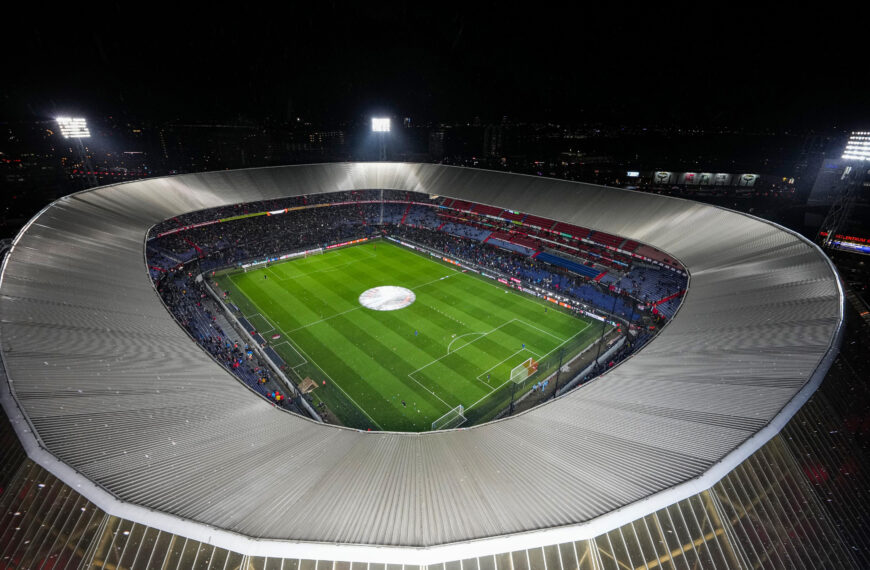
By the 1960s and 1970s, Red Star had established themselves as Yugoslavia’s most glamorous club. Their stadium, the Marakana, became one of Europe’s most intimidating venues, capable of holding vast, emotionally charged crowds. Supporters travelled from every republic, reinforcing the idea that Red Star were not merely a Belgrade club, but a Yugoslav one.
The squad reflected this identity. Players from Serbia, Croatia, Bosnia, Montenegro, and Macedonia played side by side, often without the ethnic tensions that would later dominate the region. Red Star’s football was expressive, technical, and confident, reflecting the wider Yugoslav footballing philosophy that prioritised creativity over rigidity.
A production line of exceptional talent
Red Star’s youth system developed into one of Europe’s most productive academies. The club consistently produced players who combined technical brilliance with tactical intelligence. Dragan Džajić became one of Europe’s most feared wingers, while later generations produced players such as Vladimir Petrović, Dejan Savićević, and Robert Prosinečki.
These footballers did not simply succeed domestically. They carried Yugoslav football’s reputation across Europe, admired for their elegance, composure, and versatility. Red Star were increasingly seen as a club that developed stars rather than merely purchased them.
Years of European frustration
Despite their talent, Red Star repeatedly fell short on the European stage. Throughout the 1970s and 1980s, the club suffered painful eliminations, often in the latter stages of continental competitions. Narrow defeats, controversial refereeing decisions, and missed opportunities created a sense of unfinished business.
The team frequently played some of the most attractive football in Europe, yet trophies remained elusive. This contrast between performance and outcome fostered a belief that Red Star were destined to entertain rather than dominate, admired but ultimately unfulfilled.
The season everything aligned
The 1990–91 season changed everything. Under coach Ljupko Petrović, Red Star adopted a more pragmatic European style. While still technically gifted, the team became disciplined, patient, and defensively structured. It was a deliberate shift, designed to win rather than impress.
The squad was perfectly balanced. Youthful energy mixed with experience, flair with control. This approach proved devastatingly effective at a time when Yugoslavia itself was beginning to fracture politically, making the team’s unity all the more striking.
A European Cup run on the edge of history
Red Star’s journey to the European Cup final was extraordinary. They eliminated Rangers, Dynamo Dresden, Bayern Munich, and Marseille, navigating hostile environments and high-pressure moments with composure. The semi-final victory over Bayern Munich, decided by a late own goal in Belgrade, remains one of European football’s most dramatic nights.
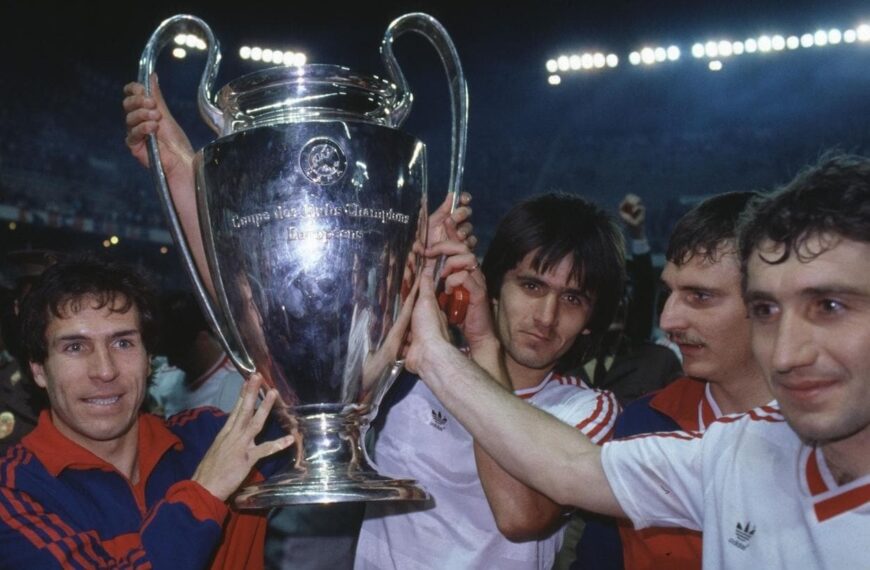
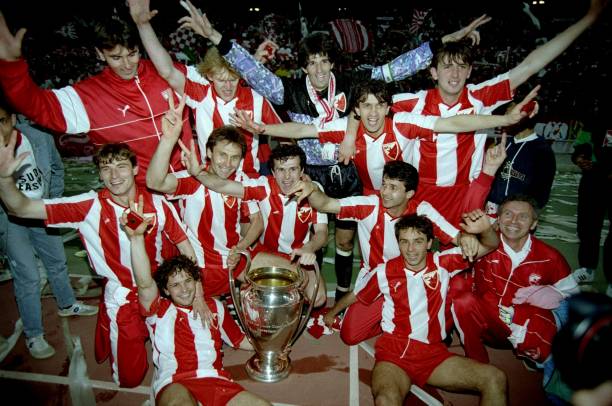
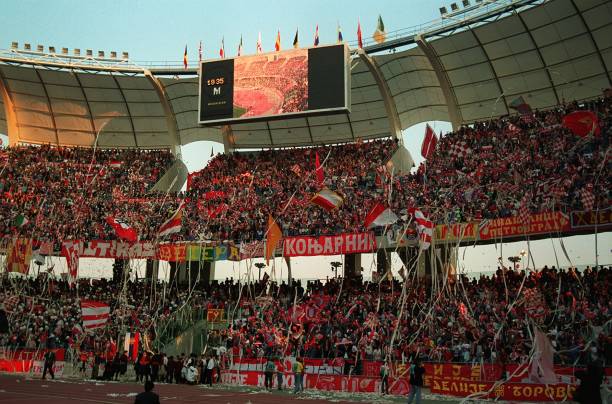
The final against Marseille in Bari ended goalless, with Red Star winning on penalties. When the final kick was converted, Yugoslav football reached its greatest ever achievement. It was also the last European Cup before the competition was rebranded into the Champions League.
Glory at the moment of collapse
The timing of the triumph was haunting. As Red Star lifted the trophy in May 1991, Yugoslavia was already dissolving. Political divisions had hardened, republics were preparing for independence, and violence was imminent. The victory felt disconnected from reality, as if belonging to a country that no longer existed.
The team celebrated under a flag that would soon disappear from international competition. The achievement became instantly symbolic, representing not just footballing success, but the final moment of Yugoslav unity on a global stage.
The champions dismantled
Rather than ushering in an era of dominance, the victory marked the end. Economic collapse, international sanctions, and war forced Red Star to sell their best players almost immediately. Dejan Savićević moved to Milan, Robert Prosinečki to Real Madrid, and Siniša Mihajlović to Roma.
Within a year, the greatest team in Yugoslav club history had been dismantled. What should have been the foundation for sustained European success instead became a farewell tour for a generation.
Supporters and shifting identity
During this period, Red Star’s supporter culture also changed. The Delije, once a broad and diverse fanbase, increasingly reflected the rising nationalism of Serbian society. Football terraces became political spaces, mirroring the fragmentation of the country itself.
Red Star survived as a club, but the Yugoslav identity they once represented vanished. They became firmly Serbian in both culture and symbolism, a transformation shaped by circumstance rather than choice.
A victory frozen in time
Red Star’s 1991 European Cup triumph remains one of football’s greatest “what if” stories. It was the final victory of a club representing a socialist federation and the last time a Balkan side conquered Europe. No successor state has come close since.
The win stands as both a footballing achievement and a historical monument. It marks the peak of a system that could no longer exist, a moment when Yugoslav football reached its highest point just as the country itself collapsed.
What was lost with Yugoslavia
The breakup of Yugoslavia ended more than a national team. It destroyed a shared footballing ecosystem built on depth, diversity, and internal competition. Fragmented leagues, reduced resources, and political instability replaced what had once been one of Europe’s richest talent pools.
Red Star Belgrade’s greatest triumph now feels less like a beginning and more like a final chapter. It remains a reminder of what Yugoslav football was capable of, and what it lost forever.

 By
By