
A prodigy from Sarajevo
Safet Sušić was born in 1955 in Zavidovići and raised in Sarajevo, a city that would shape both his football and his outlook on life. From an early age, it was clear he possessed an uncommon relationship with the ball. He was not fast in the traditional sense, nor physically imposing, but his control, awareness, and imagination set him apart immediately. Coaches quickly realised they were dealing with a player who saw the game differently.
At FK Željezničar Sarajevo, Sušić developed in an environment that valued technical skill and intelligence. Yugoslav football at the time was rich in creative midfielders, yet even among this abundance, Sušić stood out. His touch was delicate, his passing precise, and his ability to find space seemed instinctive. He played with calmness, rarely rushing decisions, always appearing one step ahead of opponents.
By the late 1970s, Sušić was already regarded as one of the finest footballers in Yugoslavia. While others relied on physical intensity or flair, he controlled matches quietly, dictating rhythm and unlocking defences with subtle movements rather than dramatic gestures.
The heartbeat of Yugoslav football
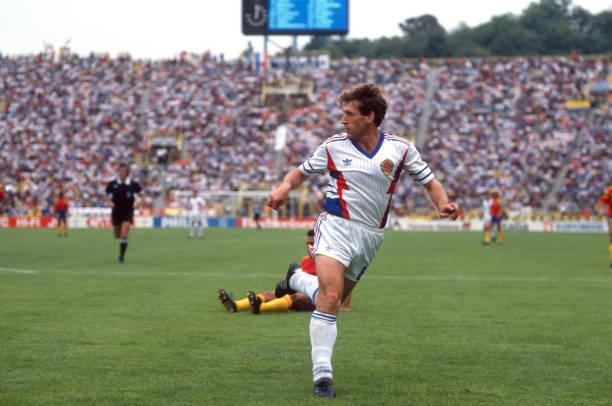
Sušić made his Yugoslavia debut in 1977 and quickly became central to the national team. His role was not always clearly defined on paper, but on the pitch he was the organiser, the link between midfield and attack, and often the final decision-maker. Teammates trusted him implicitly, knowing that possession rarely died at his feet.
During the 1980s, Yugoslavia possessed immense attacking talent, yet the team often lacked balance and stability. In this context, Sušić became the glue holding everything together. He was not a loud leader, nor a commanding presence, but his influence was undeniable. When Yugoslavia played well, Sušić was almost always involved.
Despite his brilliance, international success remained elusive. Yugoslavia were competitive but inconsistent, capable of brilliance one match and collapse the next. Sušić, often the most composed player on the pitch, became a symbol of Yugoslavia’s paradox: exceptional quality without sustained achievement.
Paris becomes a stage
In 1982, Sušić joined Paris Saint-Germain, a move that would define his club career and elevate his reputation across Europe. PSG were not yet the global brand they would become decades later. They were ambitious but inconsistent, searching for identity and leadership. In Sušić, they found both.
Almost immediately, he became the team’s creative centre. French football had seen gifted midfielders before, but Sušić brought a different sensibility. He played between lines effortlessly, drawing defenders out of position and exploiting spaces others did not even notice. His assists were often as memorable as goals, threaded passes delivered with minimal backlift and perfect timing.
Sušić led PSG to a domestic title, becoming the club’s all-time leading assist provider and one of its most influential players. Fans adored him not just for his skill, but for his humility. He did not seek attention, rarely celebrated extravagantly, and allowed his football to speak for itself.
In France, Sušić was appreciated as an artist. In Yugoslavia, he was often taken for granted.
Brilliance amid national fracture
As Sušić entered the later stages of his career, Yugoslavia itself began to unravel. Political tensions increased, nationalism replaced unity, and football became increasingly entangled with identity and division. For players like Sušić, who embodied the idea of a shared Yugoslav culture, this shift was deeply unsettling.
By the late 1980s, younger stars were emerging, and the spotlight slowly moved away from him. Yet even as new talents dazzled, Sušić remained one of the most reliable and intelligent footballers in the squad. His experience and composure were invaluable in a team struggling to maintain coherence amid external pressures.
The ultimate cruelty came with Euro 1992. Yugoslavia qualified comfortably, boasting one of its most talented squads ever assembled. Sušić, though no longer at his peak, was still part of a generation capable of winning the tournament. Instead, Yugoslavia were expelled due to international sanctions. Denmark replaced them and went on to win the competition.
For Sušić, this moment symbolised everything that defined his international career. Not failure on the pitch, but denial by circumstance.
A quiet ending
Sušić retired without the international honours his talent deserved. Unlike some contemporaries, he did not reinvent himself as a celebrity or controversial figure. His post-playing career included coaching roles, most notably with Bosnia and Herzegovina, where he guided the national team to their first World Cup in 2014.
This achievement carried deep emotional weight. Having represented a nation that no longer existed, Sušić helped a new one reach football’s greatest stage. It was not a replacement for what was lost, but it was a form of closure.
As a coach, he mirrored his playing style: calm, understated, and tactically intelligent. He trusted players, avoided theatrics, and focused on structure without stifling creativity.

Remembering Safet Sušić
In discussions of Yugoslav football legends, Sušić’s name sometimes sits behind louder personalities and flashier careers. Yet those who watched him closely understand his significance. He was a footballer who elevated everyone around him, a player whose influence extended beyond statistics.
Sušić represented the best of Yugoslav football values: intelligence over force, creativity over rigidity, and humility over ego. His career unfolded during a period of decline and fragmentation, making his consistency even more remarkable.
He did not define Yugoslav football through trophies or dramatic moments. He defined it through control, vision, and elegance. In a fractured nation, Safet Sušić remained whole.
That may be his greatest legacy.

 By
By