
A nation created by circumstance
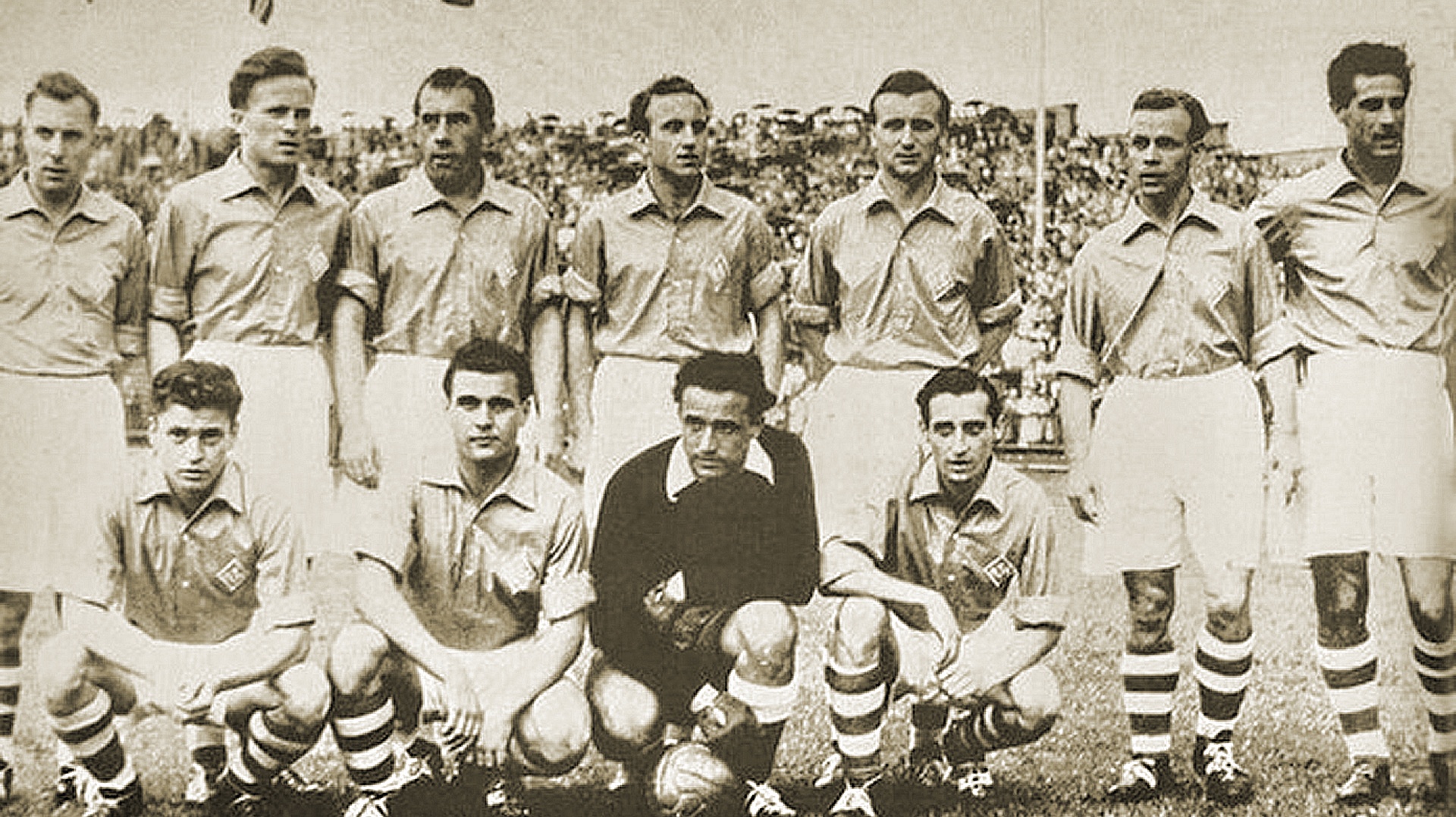
The Saarland national football team existed not because of sporting ambition, but because of political uncertainty. In the aftermath of the second world war, Europe was fragmented into zones of influence, and nowhere was this more visible than in the Saarland. Caught between France and a defeated Germany, the region became a semi-autonomous protectorate, separate enough to require its own institutions, but incomplete enough to feel temporary.
Football followed politics. With West Germany barred from international competition and the Saarland administratively detached from it, a separate national team was formed almost by accident. What followed was one of the strangest episodes in international football history: a national side that played competitive matches, entered world cup qualifiers, and then vanished without legacy, trophies, or continuity.
The political roots of separation
After 1945, Saarland came under French administration. While not fully independent, it was economically aligned with France and politically distanced from Germany. This ambiguity shaped everything, including sport. The region had strong football traditions, particularly around industrial clubs like FC Saarbrücken, but no clear national identity.
France encouraged separation, seeing the Saarland as a buffer state and economic asset. Germany, meanwhile, viewed the arrangement as temporary. Within this tension, the Saarland football association was founded in 1948 and gained FIFA membership in 1950, a remarkable achievement for a territory whose future was unresolved.
The existence of a national team was less a declaration of independence than a bureaucratic necessity.
Assembling a national side
The Saarland national team drew its players almost entirely from local clubs, most notably FC Saarbrücken. These were German footballers in every cultural sense, speaking German, trained in German systems, and emotionally tied to German football history. Yet they wore a different badge and competed under a different flag.
There was little time to build identity. Matches were arranged quickly, squads assembled pragmatically, and coaching appointments made with limited resources. The team played in blue and white, colours that reflected regional symbolism rather than nationalism.
For the players, representing Saarland was less about pride and more about opportunity. It allowed international football at a time when West Germany was still rebuilding its sporting structures.
Early matches and quiet competitiveness
Saarland’s first international matches were friendlies, often against second-string or regional sides. Results were modest but respectable. The team was organised, physically competitive, and tactically conservative, reflecting the football culture of the time.
The most unusual aspect was not how Saarland played, but who they played against. They faced established national teams while knowing that their own country might cease to exist within years. Each match carried an air of impermanence.
Despite this, the team developed a functional cohesion. Players knew each other well from domestic competition, and the lack of external pressure allowed them to perform without expectation.
World cup qualification and an impossible draw
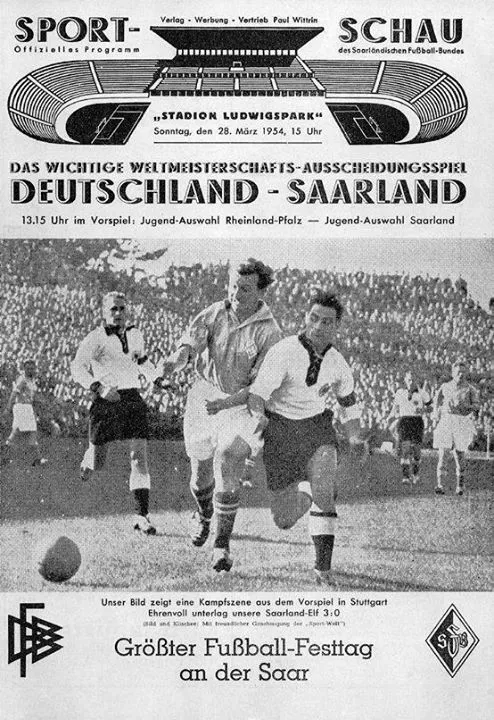
The Saarland national team entered the qualifiers for the 1954 world cup, a decision that elevated its brief existence into footballing history. Drawn into a group with Norway and West Germany, Saarland faced a unique situation: competing directly against the nation it might soon rejoin.
The matches were surreal. Saarland defeated Norway 3–2, recording its most significant victory. Against West Germany, results were predictable but symbolic. A 3–0 defeat at home and a 3–1 loss away highlighted the gap in quality, but also underlined the absurdity of the arrangement.
Players faced former teammates. Fans watched with conflicted loyalties. The matches were competitive, but emotionally awkward.
Identity without permanence
The core problem for the Saarland team was not performance, but purpose. Unlike emerging nations using football to assert independence, Saarland had no long-term vision. There was no youth pipeline, no domestic league built around national separation, and no cultural movement behind the team.
Supporters attended matches, but enthusiasm was muted. Most residents saw themselves as German, temporarily detached rather than newly independent. Football could not manufacture identity where politics refused to settle.
As West Germany returned to international football and began rebuilding its reputation, Saarland’s role became increasingly redundant.
The end arrives quietly
In 1956, a referendum confirmed that the Saarland would rejoin West Germany. With that decision, the national team’s fate was sealed. FIFA membership was withdrawn, the football association dissolved, and players returned to German competition without ceremony.
There was no farewell match, no commemorative tournament, no attempt to preserve the team’s memory. The Saarland national team simply stopped existing.
Unlike other defunct teams, it left behind little documentation and few myths. Its records were absorbed into football archives, rarely revisited.
Players without a country
For the players involved, the transition was seamless. Many continued their careers in German football without disruption. Some would later experience international football again, this time under the West German flag.
Yet the Saarland caps remained anomalies. Appearances for a country that no longer existed, recorded in statistics but detached from narrative. These players were neither pioneers nor rebels. They were professionals navigating an unusual moment.
Their careers highlight how arbitrary international football can be when shaped by politics rather than culture.
A footnote shaped by history
The Saarland national team is rarely mentioned alongside other vanished sides. Unlike the Soviet Union or Yugoslavia, its existence was brief and its impact limited. It did not leave tactical innovations or legendary matches behind.
What it did leave is a reminder of football’s vulnerability to political rearrangement. National teams are often presented as eternal expressions of identity. Saarland exposes how fragile that assumption can be.
For a few years, a team existed because borders were unclear and futures undecided. When clarity returned, football adjusted without protest.
Why the Saarland still matters
The story of the Saarland national team matters precisely because it feels unnecessary. It challenges the idea that every national side emerges from deep-rooted identity or popular demand. Sometimes, teams exist simply because administrators need them to.
In an era where football increasingly mirrors geopolitics, Saarland stands as an early example of the game being reshaped by forces beyond the pitch. Its brief life was not a failure, but an inevitability.
Forgotten, temporary, and quietly erased, the Saarland national team remains one of football’s strangest experiments. Not because of how it played, but because of why it existed at all.

 By
By
The registration over at bet95register was a breeze! Super straightforward and got me going in no time. Give it a shot if you’re looking to sign up: bet95register
Been lookin’ around on evotaya, and they seem to be bringin’ a fresh vibe. Maybe worth a look if you’re bored with the same old stuff. Check it out for yourself: evotaya
Just used 333bet4login to log in, and it was quick and easy. No problems getting in, which is exactly what you want. Link here: 333bet4login
Dellmx7k seems promising. Just started exploring, but so far, so good. Fingers crossed for some wins! dellmx7k
Alright people, time to share my experience with plataforma2uuu. The site is a bit basic to be honest. Games load properly though, which is the most important thing. Customer support was not very responsive to my questions though. I’d try it if your initial sites aren’t available in your area. Good luck. Have a try! plataforma2uuu
Hey everyone! So I tried the 1winapk download. Installation was pretty smooth. The interface is pretty intuitive, and the selection of games is decent. Some of the loading times are a bit laggy though. But overall, it’s a decent app. Not too bad. You should go try it out now! 1winapk