
A boy from Nelson
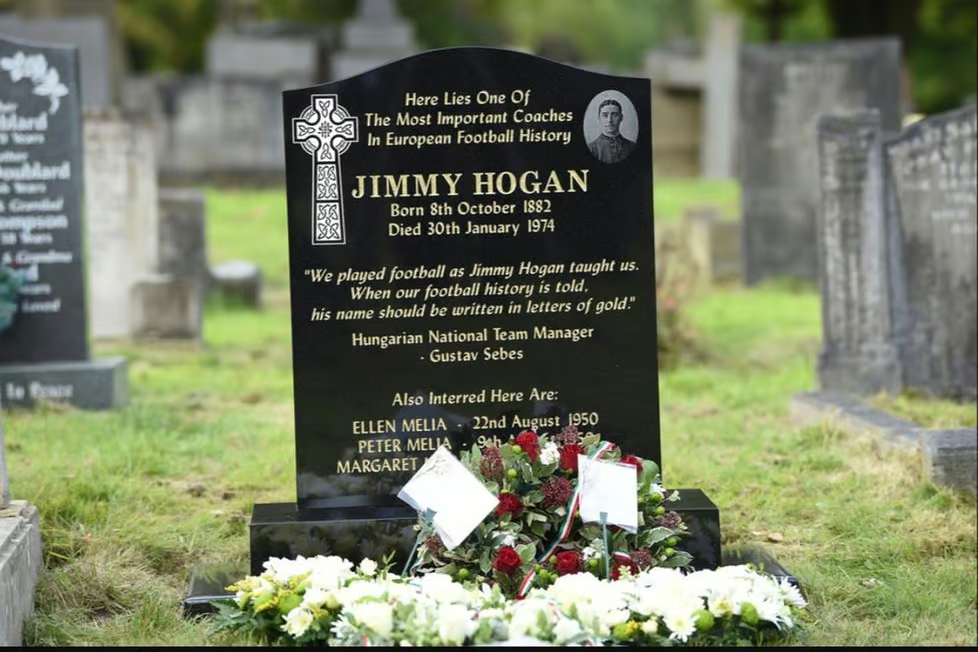
James “Jimmy” Hogan was born on 16 October 1882 in Nelson, Lancashire, a small industrial town defined by cotton mills, Nonconformist chapels, and regimented working lives. Football in Nelson was not an escape from labour so much as an extension of it. Matches were played on rough ground, often squeezed between shifts, watched by men who valued effort above elegance.
Hogan grew up inside this culture. It shaped his discipline and work ethic, but it also limited imagination. Lancashire football in the late nineteenth century prized strength, speed, and territorial gain. Passing existed, but only as a means to move the ball forward quickly. There was little room for patience or positional play.
Even as a boy, Hogan noticed something different. He was not the strongest player on the field, nor the fastest. What he possessed was awareness: where space opened, where pressure could be avoided, how a pass could change the rhythm of a game. These instincts would later define his influence, but in Nelson they were simply habits.
A modest playing career
Hogan turned professional in the early 1900s, playing as an inside forward for Burnley, Fulham, Swindon Town, and Bolton Wanderers. None of these spells brought distinction. He never played international football, never became a crowd idol, and never won major honours.
English football at the time had little interest in players like Hogan. The game was increasingly industrial, shaped by packed schedules and physical duels. Tactical thinking was minimal. Training focused on fitness and repetition rather than understanding.
Hogan absorbed the environment but did not thrive in it. His career stalled not because he lacked ability, but because he did not fit the prevailing idea of what an English footballer should be.
Leaving England
In 1909, Hogan made a decision few English professionals dared to make. He moved abroad, joining Racing Club de Paris. The transfer was informal, arranged through personal contacts rather than contracts. England viewed such moves with suspicion. Leaving the domestic game was seen as unnecessary, even unpatriotic.
Paris exposed Hogan to a football culture still forming its identity. Matches were slower, less structured, but more experimental. Players lingered on the ball. Passing sequences mattered. Training sessions involved explanation as much as exertion.
For the first time, Hogan was asked not just to play, but to teach. He explained English techniques while learning continental patience. The experience convinced him that football was not a fixed inheritance, but a language that could be translated.
Switzerland and the birth of a coach
Hogan’s most important pre-war years were spent in Switzerland, particularly with FC Zürich and Young Boys Bern. Swiss football was uniquely placed. It had adopted English rules early, but lacked England’s rigidity. Clubs were open to innovation, especially from foreign players.
Here, Hogan began to coach seriously. He structured training sessions around ball control, short passing, and movement off the ball. Defenders were encouraged to keep possession rather than clear blindly. Forwards were taught to create space rather than chase it.
These ideas were not revolutionary in theory, but they were radical in practice. Hogan treated football as something that could be improved through understanding, not just effort.
War and internment
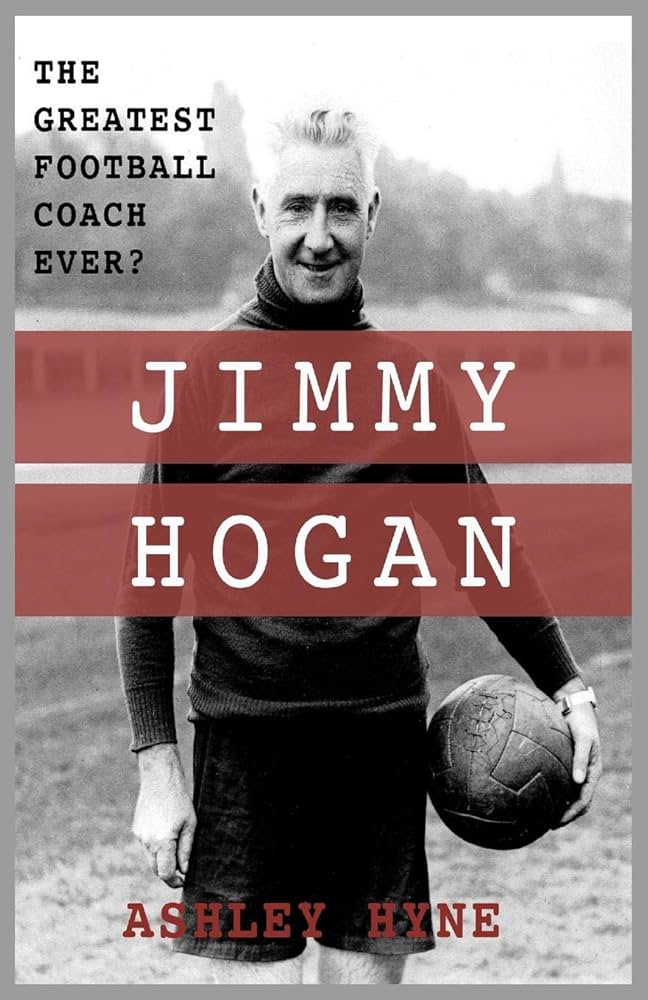
The First World War interrupted Hogan’s work brutally. As a British citizen in Austria-Hungary, he was interned during the conflict, spending years in camps rather than stadiums. His coaching career could easily have ended there.
Instead, it deepened. Hogan organised matches among internees, coached informally, and discussed football constantly. He spoke with players, administrators, and teachers from across Central Europe. The conversations mattered.
Football became theoretical. Stripped of competition, Hogan focused on principles: spacing, angles, patience, and collective intelligence. These ideas would later find fertile ground.
Hungary and MTK Budapest
After the war, Hogan found his way to Hungary, working most notably with MTK Budapest. MTK was already distinct. Based in Budapest and associated with the city’s Jewish middle class, the club valued education, organisation, and cosmopolitanism.
Hogan fit naturally. He refined his ideas into structured coaching sessions. Passing drills emphasised triangles and support. Players learned to rotate positions fluidly. Possession became a defensive tool as well as an attacking one.
MTK dominated Hungarian football during the 1910s and early 1920s, and while Hogan was not solely responsible, his influence was profound. Hungarian football began to think differently about space and intelligence.
Vienna and the Danubian style
Hogan’s greatest legacy emerged in Vienna. Austrian football in the 1920s was becoming cultural theatre. Cafés debated tactics. Newspapers analysed formations. The city wanted football to express modernity.
Hogan worked with clubs including Austria Wien, but his influence extended beyond any single team. His ideas fed directly into what became known as the Danubian school: a style defined by short passing, positional interchange, and technical elegance.
Central to this development was Hugo Meisl, the visionary administrator who built Austria’s Wunderteam. Meisl repeatedly acknowledged Hogan’s influence, particularly his belief that football intelligence outweighed physical power.
The Wunderteam’s fluid movement and collective understanding were not sudden inventions. They were the flowering of ideas Hogan had been teaching for years.
Ignored at home
Ironically, while Hogan reshaped continental football, England barely noticed. He returned occasionally, offered ideas, and was largely dismissed. The English game remained convinced of its own superiority.
When England finally faced continental opposition in the 1930s and suffered tactical embarrassment, Hogan’s name resurfaced briefly. But by then, his work was already embedded elsewhere.
He was an Englishman who changed football without changing England.
A legacy without silverware
Jimmy Hogan did not leave behind a managerial dynasty or a cabinet of trophies. His legacy is quieter and deeper. He influenced coaches, shaped philosophies, and altered how football was understood across Central Europe.
Hungary’s later tactical innovations, Austria’s golden generation, and even elements of the Dutch game decades later can trace intellectual lineage back to Hogan’s principles.
He taught football to think.
Why Hogan matters
The modern game often credits revolutions to visible figures: managers with titles, teams with trophies. Hogan offers a different model. Influence without power. Ideas without authority.
He belonged to no nation fully, yet shaped many. His life explains why football’s evolution cannot be understood through results alone.
The continental game was not invented in the 1930s. It was taught, patiently, by a man from Nelson who saw football not as force, but as conversation.

 By
By