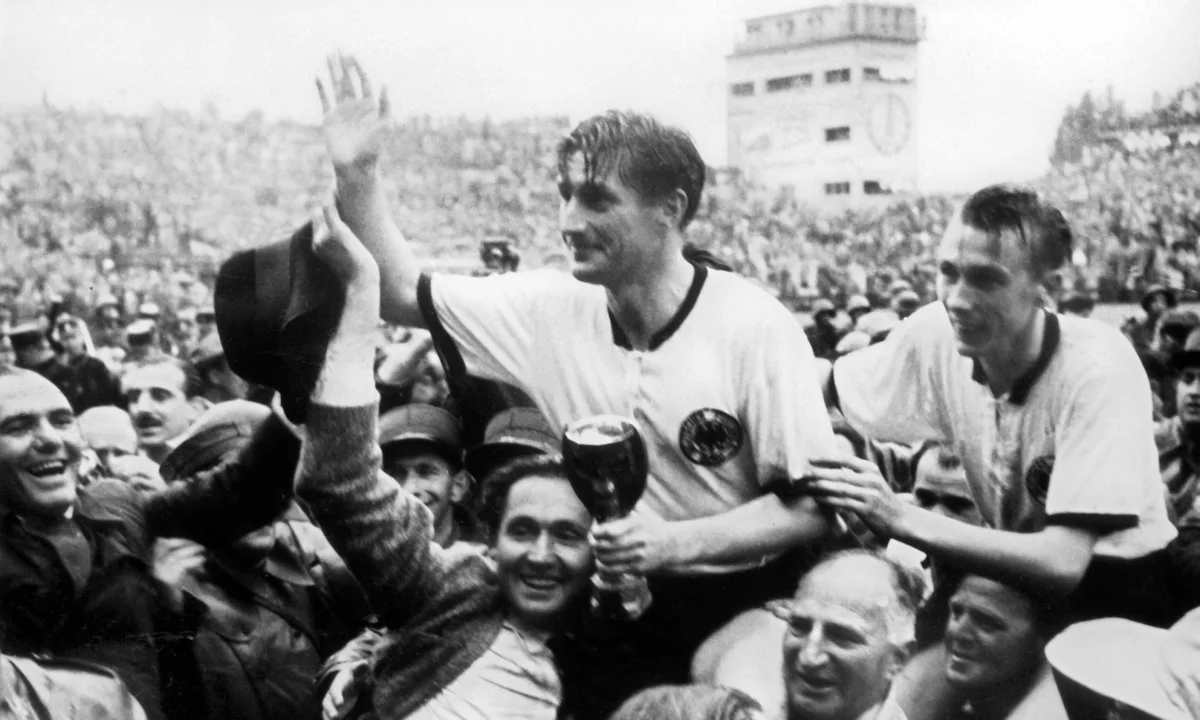

A tournament built on certainty
By the summer of 1954, international football believed it understood itself. The post-war years had restored order. Tactical ideas appeared settled. Hierarchies felt stable. Some teams were clearly better than others, and it was widely assumed that this superiority would express itself naturally when it mattered most.
The World Cup in Switzerland was meant to confirm that belief. Instead, it dismantled it.
The 1954 tournament did not simply produce a surprising winner. It changed how football understood dominance, preparation, and destiny. After Switzerland, inevitability was no longer trusted.
Hungary and the idea of perfection
No team entered a World Cup with a stronger claim to inevitability than Hungary. The national side had gone unbeaten since 1950. They had dismantled opponents with a tactical sophistication that felt years ahead of everyone else.
The core of the team came from Budapest Honvéd, itself strengthened by the conscription of elite players into the Hungarian army club. Ferenc Puskás, Sándor Kocsis, Nándor Hidegkuti, József Bozsik, and Zoltán Czibor formed the spine of a side that redefined positional play.
England had already been humiliated. The 6–3 victory at Wembley in 1953, followed by 7–1 in Budapest, convinced much of Europe that Hungary represented football’s future. Hidegkuti’s withdrawn centre-forward role destabilised defences. Puskás drifted wide and deep. The WM system collapsed under pressure.
Hungary were not just winning. They were instructing.
West Germany and cautious recovery
West Germany, by contrast, arrived in Switzerland still unsure of its place. The nation had been readmitted to international football only in 1950. Its domestic game was fragmented across regional Oberligen, with clubs like 1. FC Kaiserslautern, Borussia Dortmund, and Hamburger SV dominating locally rather than nationally.
Coach Sepp Herberger was pragmatic rather than visionary. His team relied on organisation, fitness, and discipline. Players such as Fritz Walter, Helmut Rahn, Horst Eckel, and Ottmar Walter were respected but not feared.
Germany were not expected to win. Their task, many believed, was participation rather than triumph.
A strange tournament structure
The 1954 World Cup format itself encouraged unpredictability. Group stages included seeded teams who did not all play each other. Some matches were replayed rather than decided by goal difference.
Hungary’s group illustrated the imbalance. They defeated South Korea 9–0 and then dismantled West Germany 8–3. Puskás was injured in that group match, fouled heavily by Werner Liebrich, and would miss the semi-final.
The scoreline reinforced belief in inevitability. Hungary were untouchable. Germany, it seemed, were expendable.
Paths diverge
Hungary advanced confidently. They eliminated Brazil in the infamous “Battle of Berne,” a violent quarter-final marked by fouls, arguments, and post-match altercations. Kocsis scored twice. Hungary survived chaos through superiority.
In the semi-final, Hungary defeated Uruguay, the reigning champions, 4–2 after extra time. It was the first World Cup defeat Uruguay had ever suffered. Kocsis scored again, reinforcing his status as the tournament’s most lethal striker.
Hungary had beaten England, Brazil, and Uruguay in the space of a year. The World Cup felt like a formality.
Germany’s path was different. They defeated Turkey in a replay after losing once in the group. In the quarter-final, they beat Yugoslavia. In the semi-final, they overcame Austria 6–1, with Rahn and Morlock scoring.
Germany improved quietly. Few noticed.
The final and its assumptions
The final in Bern was framed as confirmation rather than contest. Hungary were expected to complete their coronation. Germany were expected to resist briefly, then yield.
Early events supported that narrative. Within eight minutes, Hungary led 2–0. Puskás, declared fit despite injury, scored. Czibor followed. The inevitability seemed intact.
What followed unsettled everything.
Germany equalised within ten minutes through Max Morlock and Helmut Rahn. Rain fell heavily, soaking the pitch. Germany’s boots, fitted with adjustable studs supplied by Adolf Dassler, offered better traction.
Hungary still dominated possession. They still created chances. But control no longer translated cleanly into goals.
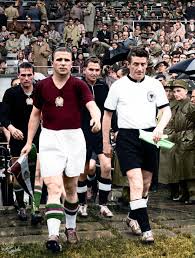
The collapse of certainty
The match turned on moments rather than patterns. Rahn scored again in the 84th minute, cutting inside before shooting low past Gyula Grosics. Hungary pressed desperately. Puskás thought he had equalised, only for the goal to be ruled offside.
Germany won 3–2.
The result shocked football not because Germany won, but because Hungary lost. An unbeaten team, tactically superior, statistically dominant, had failed at the moment everyone believed outcome was pre-determined.
The “Miracle of Bern” entered German memory immediately. Elsewhere, it created doubt.
Why inevitability failed
Hungary’s defeat has been analysed endlessly. Puskás’s injury mattered. Fatigue mattered. The physical toll of earlier matches mattered. Officiating decisions mattered.
But the deeper lesson lay elsewhere. Football, it turned out, could not guarantee expression of superiority in single matches. Tactical brilliance did not remove variance. Preparation did not eliminate chance.
The 1954 final exposed the fragility of certainty.
Consequences for international football
After Switzerland, international football grew more cautious. Coaches studied risk. Defensive organisation gained value. Fitness and adaptability became priorities.
The idea of invincible teams faded. Dominance was now understood as conditional rather than absolute.
Hungary themselves never fully recovered. The 1956 uprising fractured the team. Puskás, Kocsis, and Czibor left the country. The side that had redefined football dissolved quickly.
Germany, meanwhile, built belief. The victory became foundational, shaping identity and confidence.
Memory and myth
The 1954 World Cup occupies a unique place in football memory. It is remembered not for its tactics alone, but for its rupture.
Hungary remain admired, studied, and romanticised. Germany’s win is contextualised as miracle rather than blueprint. The tournament resists neat interpretation.
That resistance is its legacy.
A turning point
Before 1954, football trusted patterns. After 1954, it respected uncertainty.
The World Cup in Switzerland did not end dominance. It ended belief in inevitability. Football emerged more complex, more anxious, and more human.
That shift, more than any trophy, defines the tournament’s place in history.

 By
By
Time to see what 939gamelogin is all about! Hopefully the login process is quick and easy. I’m ready to play!! What are you waiting for?: 939gamelogin
Gigabetcasino, eh? Let’s hope those ‘giga’ bets pay off big time. Got my strategy ready. Let the spins begin! gigabetcasino
GK999game… alright, worth a look! Wondering if they got any unique titles. Searching for some fresh adventures now. gk999game