
A world game with closed doors
By the 1950s, football liked to describe itself as global. FIFA membership expanded. International fixtures multiplied. World Cups returned after wartime absence. Yet beneath this surface of inclusion, African and Asian football remained largely excluded from the sport’s centre.
The decade exposed a contradiction. While Europe and South America rebuilt and consolidated power, much of Africa and Asia were treated as peripheral participants in a game that claimed universality but practised hierarchy.
FIFA membership without influence
Many African and Asian associations joined FIFA during or shortly after the Second World War. Egypt had been a member since 1923. India joined in 1948. Japan returned in 1950. Others followed as colonial structures weakened.
Membership, however, did not equal voice. Decision-making power remained concentrated in Europe and South America, particularly among associations such as the FA, FIGC, and AFA. Voting structures favoured established members. Travel costs and logistical barriers further limited participation.
In theory, the world game was open. In practice, access was selective.
Africa before CAF
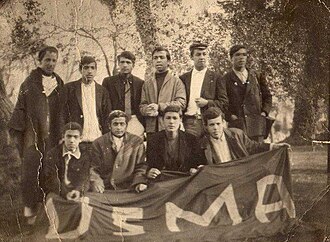
African football in the early 1950s lacked a continental body. Competitions were fragmented and often organised along colonial lines. Clubs such as Al Ahly and Zamalek in Egypt, Espérance in Tunisia, and USM Alger in French Algeria played within domestic or colonial frameworks rather than African ones.
National teams existed, but opportunities were limited. Egypt remained the continent’s primary representative, appearing at the 1934 World Cup and the 1952 Olympics. Elsewhere, football infrastructure was uneven, shaped by colonial investment rather than local development.
The absence of a continental federation left African football without coordination or collective leverage.
Asia and uneven recognition
Asian football faced similar marginalisation. India, South Korea, and Japan were among the continent’s strongest sides, but regular international competition was scarce.
India’s withdrawal from the 1950 World Cup became emblematic. The decision, influenced by cost, preparation, and disagreement over playing barefoot, was later simplified into myth. What mattered more was the lack of structural support. Asian qualification routes were unclear. Investment was minimal.
Japan, rebuilding after defeat in war, re-entered international football cautiously. South Korea, despite competitive domestic football, remained geographically distant from FIFA’s centres of power.
Asia existed within the game, but rarely within its plans.
The 1954 World Cup absence
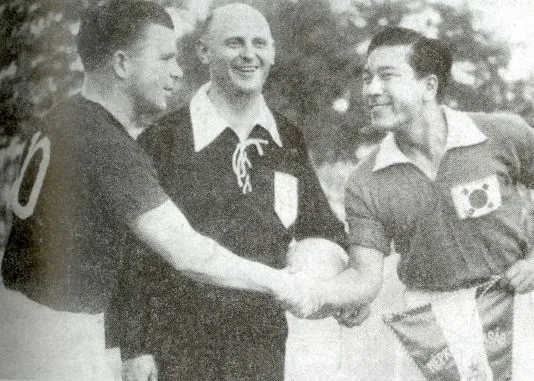
The 1954 World Cup highlighted the imbalance starkly. Africa had no automatic place. Asia’s representation was symbolic at best. South Korea appeared, losing heavily to Hungary and Turkey, but their participation felt isolated rather than integrated.
Qualification structures favoured proximity and familiarity. European and South American teams played regularly against each other. African and Asian sides were often required to travel vast distances for limited opportunity.
The World Cup remained global in name more than composition.
The birth of CAF
Frustration gradually turned into organisation. In 1957, CAF was founded by Egypt, Sudan, Ethiopia, and South Africa. It was a political as well as sporting act, asserting African football’s right to self-governance.
The Africa Cup of Nations, first held in 1957, was modest in scale but significant in intent. It offered African teams a platform independent of European approval.
CAF’s formation marked the beginning of collective resistance to marginalisation, even if immediate change was limited.
Politics, decolonisation, and football
The 1950s were a decade of political transition. Independence movements reshaped Africa and Asia. Football became a vehicle for identity and legitimacy.
National teams represented more than sport. Matches carried symbolic weight. Victories challenged assumptions of inferiority. Defeats were contextualised within broader struggles.
FIFA, however, moved cautiously. Expansion threatened existing power balances. Recognition lagged behind reality.
Structural exclusion
Marginalisation was not only geographic. It was institutional. African and Asian teams had fewer international fixtures, limited funding, and minimal access to elite competition.
Refereeing standards, tactical exchange, and administrative experience developed unevenly. When teams from outside Europe and South America did appear, they were judged harshly, often reinforcing stereotypes rather than challenging structures.
The system rewarded familiarity, not potential.
A decade of waiting
By the end of the 1950s, African and Asian football had not yet broken through. But foundations were laid. CAF existed. Asian confederation structures began to form. Domestic leagues strengthened.
The margins were still real, but they were no longer accepted quietly.
The struggle for recognition would define the following decades.

 By
By