
A career reduced by location
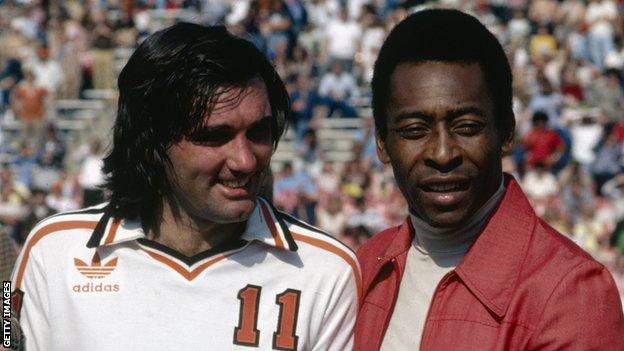
George Best’s career is often told as a single story, anchored almost entirely to Manchester United. Old Trafford, the Busby Babes’ shadow, the European Cup of 1968, and the collapse that followed. What sits outside that frame is usually dismissed as an epilogue.
It shouldn’t be.
Best spent nearly half his professional life away from Manchester United. Those years were scattered across countries, leagues, and levels, shaped as much by geography and circumstance as by ability. Taken together, they reveal not a fallen star, but a footballer searching for somewhere the game could still fit him.
The first exit that mattered
When Best left Manchester United in 1974, it was not a retirement. He was 27.
His destination, Jewish Guild in South Africa, was controversial and poorly understood at the time. The league existed in isolation under apartheid, attracting European players whose careers had stalled or fractured. Best’s brief spell there was less about footballing ambition than escape.
The pace was slower. The attention was intense. The fit was temporary.
He returned to England without direction, his reputation diminished but his ability still obvious.
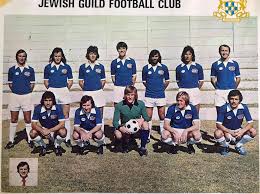
Stockport County and the absence of spectacle
Best’s move to Stockport County in the Fourth Division later in 1974 is often treated as novelty. A Ballon d’Or winner turning out at Edgeley Park seemed absurd.
But the football itself was not.
In limited appearances, Best showed flashes of his old reading of space, his balance untouched. What had changed was the environment. Smaller crowds, poorer pitches, and minimal protection from defenders made expression harder.
This was football stripped of glamour. Best did not stay long.
Cork Celtic and returning home
In 1975, Best joined Cork Celtic in the League of Ireland. For a brief moment, the move made sense. A return to Ireland, away from English scrutiny, offered the possibility of control.
Cork Celtic built their identity around him. Attendances rose. Media followed. The league struggled to contain the attention.
On the pitch, Best was influential but frustrated. Off it, the structures needed to support him simply did not exist. The club folded shortly after his departure.
The problem was not the league’s quality. It was its fragility.
The United States as refuge
No country offered Best more second chances than the United States.
He played for Los Angeles Aztecs, Fort Lauderdale Strikers, San Jose Earthquakes, and Tulsa Roughnecks across the late 1970s and early 1980s. The NASL was chaotic, uneven, and permissive — but it valued names.
In America, Best was allowed to play without explanation. Defenders gave space. Referees intervened less. Matches were staged as events rather than examinations.
He thrived intermittently. Not consistently, but enough to remind audiences what made him different.
The league did not demand discipline. That was both its appeal and its flaw.
A game that moved slower
Outside England, Best encountered versions of football that moved differently.
In the NASL, tempo was reduced. In Ireland, organisation was loose. In lower English divisions, structure existed without refinement. None resembled the environment that had sharpened him at Manchester United.
Best needed rhythm, not restraint. When he found it, he was still exceptional. When he didn’t, the game exposed him.
This was not decline alone. It was incompatibility.
Brief returns, permanent distance
Best returned briefly to England with Fulham in 1976. Under Malcolm MacDonald, the move generated excitement rather than stability. Craven Cottage offered space and tolerance, but the experiment ended quickly.
Later appearances for Hibernian and non-league sides felt symbolic rather than restorative.
By then, the idea of Best had overtaken the player.
What these years reveal
Outside Manchester United, Best’s career became fragmented. But fragmentation does not equal irrelevance.
He played in leagues that football history often ignores. He tested environments that could not fully support him. He revealed how much elite football depends on context, not just talent.
At United, structure carried him. Outside it, he was exposed to football’s uneven edges.
Legacy beyond the centre
George Best’s post-United years complicate his story. They resist nostalgia.
They show a footballer whose genius required alignment — with teammates, tempo, and expectation. When those elements disappeared, brilliance alone was insufficient.
This does not diminish his greatness. It humanises it.
Remembering the full map
To understand George Best fully, Manchester United is essential. But it is not enough.
His time outside the club reveals football’s margins: unstable leagues, experimental competitions, and careers shaped by chance rather than planning.
Best belonged to a specific moment and place. Once separated from it, he did not vanish. He wandered.

 By
By