
Numbers before meaning
For much of football’s early history, players wore numbers without identity. Shirt numbers were administrative tools, introduced in England in the late 1920s to help referees, reporters, and spectators distinguish players on crowded pitches. They were not personal, permanent, or symbolic. A player might wear 2 one week and 9 the next, depending on selection and position.
Yet over time, these numbers stopped being neutral. They began to describe roles, responsibilities, and expectations. By the mid-20th century, shirt numbers had quietly reshaped how footballers were understood — by managers, supporters, and players themselves.
The 2–11 system takes hold
The standardisation of shirt numbers emerged alongside the rise of the WM formation in England during the 1930s. Clubs like Arsenal under Herbert Chapman popularised a positional numbering system that aligned directly with tactical roles.
In this structure, numbers 1 to 11 mapped clearly onto the pitch. The goalkeeper was 1. Full-backs wore 2 and 3. Half-backs took 4, 5, and 6. Forwards were 7 through 11. This logic spread rapidly across Britain and, through touring teams and international competition, across Europe and South America.
What mattered was not the shirt itself, but what the number implied. A number 5 was expected to dominate centrally. A number 10 was expected to create. Numbers became shorthand for tactical duty.
When numbers fixed identities
As football professionalised after the Second World War, numbers became fixed to players rather than matchdays. In leagues like the English First Division, Serie A, and La Liga, squad numbers slowly replaced weekly assignments. This shift was subtle but profound.
A player no longer played as a winger or inside-forward temporarily. He was a number 7 or number 10. Over time, players were recruited, developed, and judged through these numerical identities.
At clubs like Real Madrid in the 1950s, Alfredo Di Stéfano’s association with the number 9 blurred traditional boundaries. He dropped deep, created play, and attacked space — but the number still framed expectations. Even when roles evolved, numbers anchored perception.
The number 10 becomes sacred
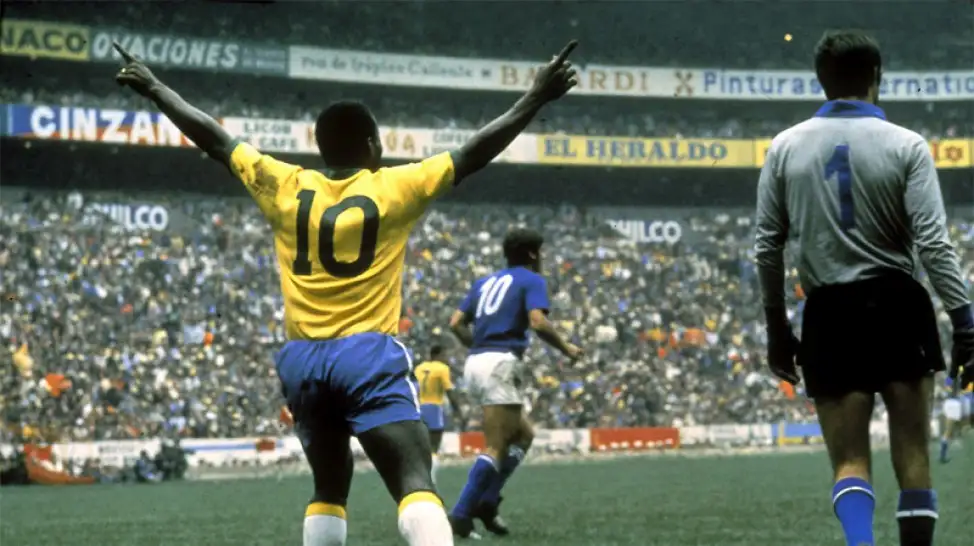
No number absorbed more myth than 10. Originally assigned to the left inside-forward in the 2–3–5 formation, it later came to represent creativity, leadership, and freedom.
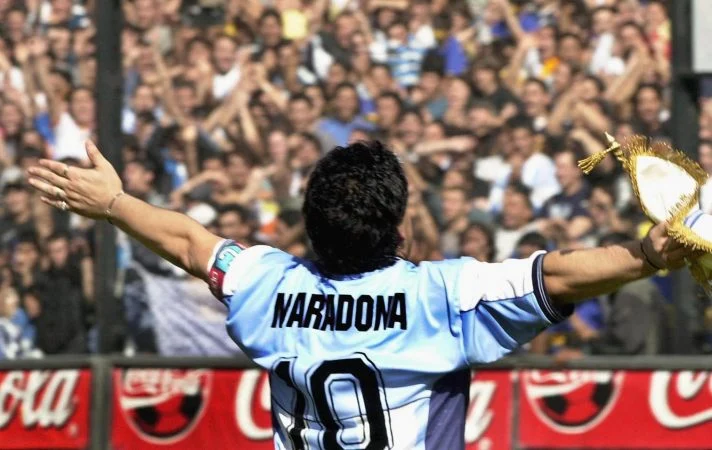
Pelé wore 10 with Santos and Brazil almost by accident, yet the number became inseparable from his image. Diego Maradona later reinforced the symbolism at Argentinos Juniors, Napoli, and Argentina. By the 1980s, number 10 no longer described a position — it described a status.
Clubs and nations began shaping entire tactical systems around accommodating their number 10s. The shirt itself became a promise to supporters: this is where imagination lives.
Defensive numbers and invisible labour
While attackers gained romance, defensive numbers carried burden. Number 4 and number 5 became associated with discipline, authority, and physical sacrifice. In England, the number 5 centre-half was often the team’s organiser, a role epitomised by players like Billy Wright at Wolverhampton Wanderers.
In Italy, the number 6 took on similar meaning within catenaccio systems. At Inter under Helenio Herrera, defensive numbers were worn with pride, but rarely with celebration. These roles were vital, yet rarely celebrated in the same way as attacking numbers.
Shirt numbers reinforced football’s hierarchy of value.
South America and flexibility
In South America, numbering systems were adopted but interpreted more fluidly. Argentine and Brazilian teams often retained positional numbering, but individual expression mattered more than strict numerical obedience.
At Boca Juniors and River Plate, number 5 became the holding midfielder — a role combining grit with intelligence. Players like Antonio Rattín and later Fernando Redondo redefined what that number meant, blending defensive duty with elegance.
Numbers became cultural markers, shaped by national interpretations of football itself.
Squad numbers and commercialisation
The 1990s accelerated change. Permanent squad numbers were introduced in competitions like the Premier League in 1993, aligning football with global broadcasting and merchandising. Names on shirts followed soon after.
This altered the meaning of numbers again. Players could now build personal brands around a number. Eric Cantona’s 7 at Manchester United, Alessandro Del Piero’s 10 at Juventus, and Ronaldo’s 9 at Internazionale became commercial identities as much as tactical ones.
Numbers stopped being purely functional. They became assets.
Modern football and broken logic
Today, the link between number and role is looser than ever. Full-backs wear 66 or 38. Centre-forwards wear 7. Defensive midfielders wear 8. At clubs like Manchester City and Bayern Munich, tactical roles shift weekly, while numbers remain fixed.
Yet the old meanings still linger. A number 9 is still judged by goals. A number 10 is still expected to create. When a young player is handed a symbolic number, it carries psychological weight, even if the tactics no longer match.
Numbers no longer define football roles — but they continue to shape how those roles are understood.
Why it still matters
Shirt numbers changed football quietly. They helped standardise tactics, reinforce hierarchies, and create icons. They shaped how players saw themselves and how supporters interpreted the game.
Even in an era of fluid systems and data-driven analysis, the language of numbers remains deeply embedded. Football still speaks in digits, even when the pitch no longer obeys them.

 By
By