
A ground built for a city
Before Celtic became a global name, Celtic Park was a deeply local place. It was not a destination stadium or a symbol exported abroad. It existed for Glasgow, for the east end, and for a community that treated football as something lived rather than consumed.
By the early decades of the twentieth century, Celtic Park was already large, already intimidating, and already central to Scottish football. Yet its meaning was still shaped more by proximity than prestige. This was a ground you walked to, not one you travelled for.
The idea of Celtic as an international brand would come much later.
The early shape of paradise
Celtic Park opened in its modern location in 1892, replacing an earlier ground nearby. From the beginning, scale mattered. Terracing was expanded repeatedly, driven not by ambition but demand. Glasgow’s population growth, industrial rhythms, and weekend habits filled the stands naturally.
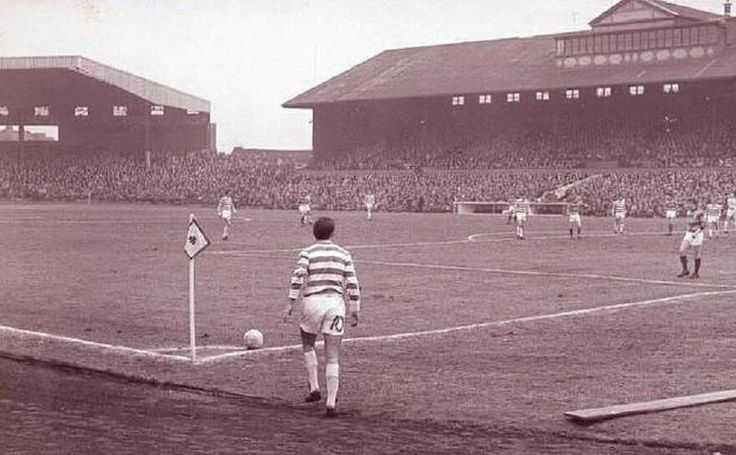
By the 1920s and 1930s, Celtic Park regularly hosted crowds that dwarfed most European stadiums. Attendances of 80,000 were not exceptional. They were expected.
Yet the stadium remained rudimentary. Concrete and earth, limited roofing, little concern for comfort. Celtic Park was not designed to impress visitors. It was designed to hold people.
A home shaped by rivalry
Much of Celtic Park’s identity was defined in opposition. Matches against Rangers gave the stadium its sharpest edge. Old Firm fixtures turned the ground into a pressure chamber, where noise and density mattered as much as tactics.
Celtic Park was not neutral territory. It was partisan, vocal, and unapologetic. The architecture amplified this. Steep terracing pushed crowds close to the pitch. Sound had nowhere to escape.
For visiting teams, the scale could overwhelm. For Celtic players, it created expectation rather than reassurance.
Players before celebrity
Before the club’s global expansion, Celtic Park was not a stage for stars in the modern sense. Players like Jimmy McGrory, Patsy Gallacher, and Willie Maley’s early teams were revered locally, but their fame rarely travelled far.
Their relationship with the ground was intimate. They played in front of neighbours, co-workers, and extended family. The boundary between crowd and pitch felt thin.
Celtic Park rewarded familiarity. Players who understood its rhythms, its wind patterns, and its mood gained an advantage outsiders struggled to replicate.
European nights before Europe mattered
Celtic’s early participation in continental competition brought new meaning to the stadium. Matches in the European Cup during the 1950s and early 1960s exposed Celtic Park to foreign opponents unfamiliar with its intensity.
Clubs from France, Austria, and Eastern Europe arrived with tactical discipline but little preparation for the atmosphere. Celtic Park did not intimidate through luxury or history. It intimidated through presence.
These matches began to shift perception. Celtic Park was no longer just Scotland’s largest ground. It was becoming a European arena.
1967 and the turning point
The Lisbon Lions changed everything.
Celtic’s European Cup victory in 1967 transformed both club and stadium. Celtic Park became a symbol rather than merely a setting. The ground that had nurtured local dominance was now associated with continental achievement.
Players like Billy McNeill, Jimmy Johnstone, Bobby Murdoch, and Bertie Auld turned Celtic Park into a reference point for global football narratives.
But the transformation was gradual. The stadium did not immediately modernise. It carried its past into its future.
Television arrives late
For much of its early life, Celtic Park was experienced only by those physically present. Radio commentary carried its sound outward, but television coverage was sporadic and limited.
This delayed exposure preserved its mystery. Supporters abroad knew Celtic as a club long before they understood the scale or atmosphere of its ground.
When televised matches became more frequent in the late 1960s and 1970s, Celtic Park finally entered the wider imagination. The image of massed green-and-white terraces became recognisable beyond Scotland.
Modernisation without erasure
The transformation of Celtic Park in the 1990s changed its structure but not its purpose. The move to an all-seater stadium altered capacity and comfort, but it also preserved continuity.
Unlike many redevelopments, Celtic Park remained on its original site. The relationship between club and place endured.
The stadium became capable of hosting global audiences without abandoning its local roots.
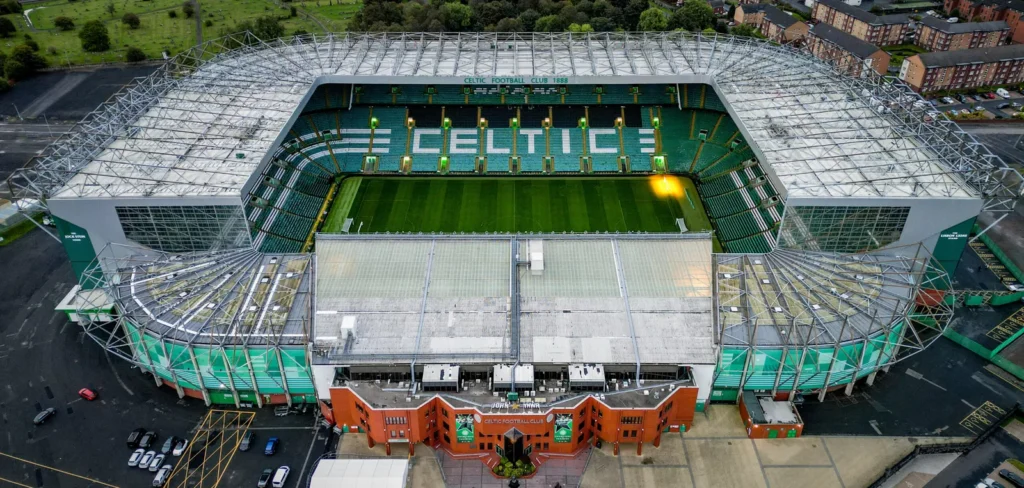
What existed before global reach
Before international tours, worldwide television deals, and commercial partnerships, Celtic Park functioned as a civic space. It was part of Glasgow’s geography, not its marketing.
It hosted football that mattered intensely to those present, even if few beyond Scotland were watching.
That era shaped everything that followed. Global recognition did not replace Celtic Park’s identity. It expanded it.
A ground that remembers
Celtic Park still carries traces of its earlier life. In the crowd patterns, in the noise, and in the expectation that the stadium should be full because it always has been.
Before Celtic became global, Celtic Park taught the club how to belong somewhere first.

 By
By