
A game before paperwork
In the 1920s, footballers moved across borders with a freedom that feels implausible today. There were no transfer windows, no international clearance systems, and little concern for contractual permanence. A player’s reputation travelled faster than any document, and a strong performance in one country could lead to an invitation in another within weeks.
This was an era when football migration was shaped by rail timetables, personal contacts, and opportunity rather than regulation. The result was a generation of early international stars whose careers ignored national boundaries long before governing bodies tried to define them.
Central Europe’s open corridors
Nowhere was this more visible than in Central Europe. Vienna, Budapest, Prague, and Bratislava formed a dense footballing network connected by rail and shared tactical culture. Players moved between clubs and countries with minimal friction.
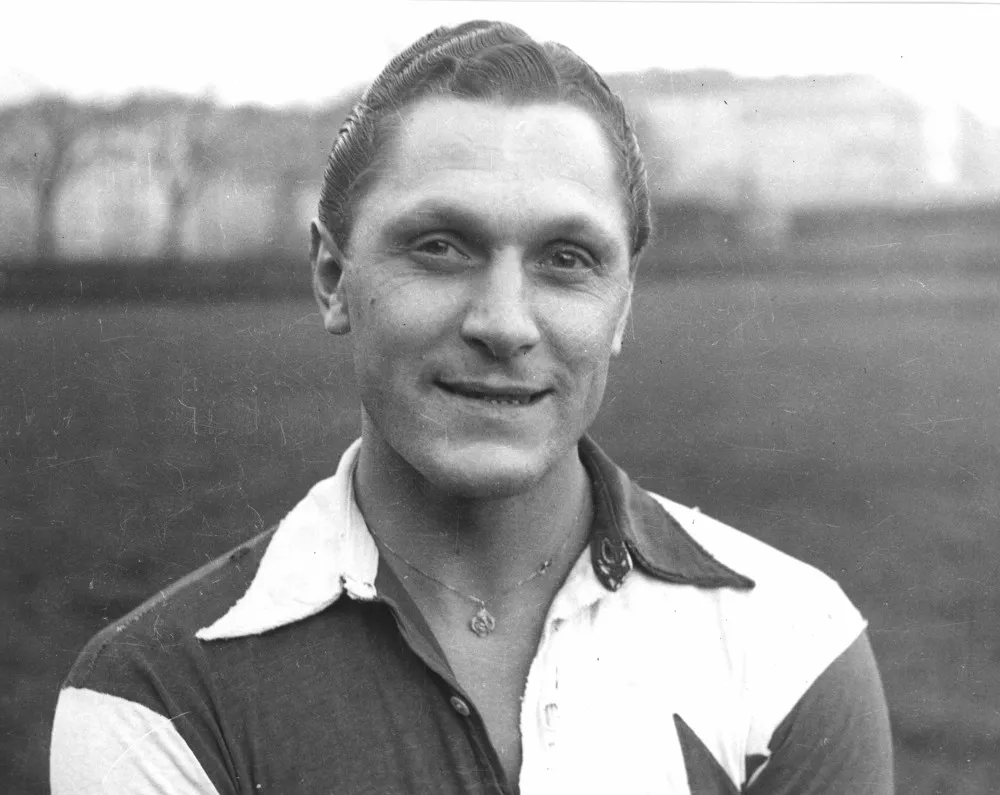
Josef “Pepi” Uridil, one of Austria’s most recognisable forwards of the early 1920s, became famous with Rapid Wien but toured extensively, playing exhibitions across Germany and Czechoslovakia. His reputation preceded him more reliably than any contract.
Hungarian players appeared regularly in Austrian and Czechoslovak teams, particularly before professionalism was formalised in Austria in 1924. MTK Budapest and Ferencváros players were frequent guests in Vienna, often filling gaps caused by injuries or suspensions.
Borders existed politically, but football treated the region as a single ecosystem.
The Danubian style travels
This fluid movement helped spread what later became known as the Danubian style: short passing, positional rotation, and technical control. It was not exported by coaches alone, but by players themselves.
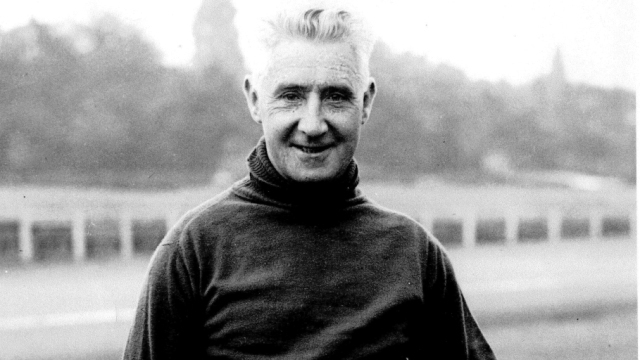
Jimmy Hogan, the English coach often associated with this tactical evolution, relied heavily on mobile players who had absorbed ideas from multiple leagues. Hungarian and Austrian footballers carried these concepts into Switzerland, southern Germany, and northern Italy through short-term stints and touring matches.
Players were educators by presence, not by design.
British players abroad, briefly
While British football is often portrayed as insular during this period, the 1920s saw a steady trickle of English and Scottish players moving overseas, usually for short spells.
In Spain, clubs like FC Barcelona and Athletic Club invited British players to strengthen squads during regional championships. Jack Greenwell, originally a player for Barcelona, later became one of Europe’s earliest itinerant coaches, working in Spain and Peru after his playing days.
In Italy, English players appeared sporadically in the Prima Division before the creation of Serie A in 1929. These moves were rarely permanent, but they reinforced football’s early international circulation.
South America’s returning travellers
Movement was not one-way. South American footballers also travelled, often returning with prestige rather than contracts.
Uruguayan players who competed in the Olympic tournaments of 1924 and 1928 became global figures. José Leandro Andrade, playing for Nacional in Montevideo, toured Europe with Uruguay and left an indelible impression in Paris. Though he did not settle abroad permanently, his style influenced European perceptions of South American football.
Argentine players followed similar paths. Clubs like Boca Juniors and Racing Club undertook European tours, where players formed temporary affiliations with local sides during extended visits.
The borderless decade rewarded exposure, not stability.
Colonial routes and unofficial networks
Empire shaped migration patterns as much as footballing ambition. Players from British colonies found opportunities in the metropole, often without formal recognition.
Footballers from South Africa and India appeared in British amateur competitions, while players born in North Africa surfaced in French regional leagues. These movements were poorly documented, but they mattered locally, challenging ideas of nationality and eligibility.
Eligibility itself was fluid. A player could represent a regional select side one month and a national team the next, depending on circumstance rather than statute.
Before national teams became fixed
International football in the 1920s lacked the rigidity that later defined it. Caps were prestigious, but nationality was interpreted loosely.
Several players represented one country at club level while being eligible for another internationally. In Central Europe, shifting borders after the First World War further blurred definitions. Players born in the Austro-Hungarian Empire often found themselves eligible for Austria, Hungary, or Czechoslovakia depending on residence rather than birth.
Football reflected political uncertainty rather than resolving it.
Money without contracts
Financial motivation mattered, but rarely in the modern sense. Payments were often informal: travel expenses, appearance fees, or secure employment arranged by club patrons.
In Switzerland, clubs in cities like Basel and Zurich attracted foreign players with promises of work alongside football. These arrangements made movement possible without formal professionalism.
The absence of binding contracts meant departure carried little stigma. Players left when opportunities arose, not when agreements expired.
Why borders eventually returned
By the end of the decade, this freedom began to narrow. Professional leagues demanded regulation. National associations sought control. FIFA moved toward standardising eligibility and transfers.
The careers of early international stars became cautionary examples rather than templates. Stability replaced spontaneity.
What was lost was not just freedom of movement, but a sense of football as a shared continental language.
What the 1920s reveal
The 1920s produced footballers who belonged everywhere and nowhere at once. Their careers were shaped by curiosity, invitation, and chance rather than planning.
They helped spread tactics, culture, and expectation across borders before those borders hardened. Modern football’s globalisation did not begin with television or agents. It began with players willing to board a train and see what awaited them at the next stop.

 By
By