
A club without a cause
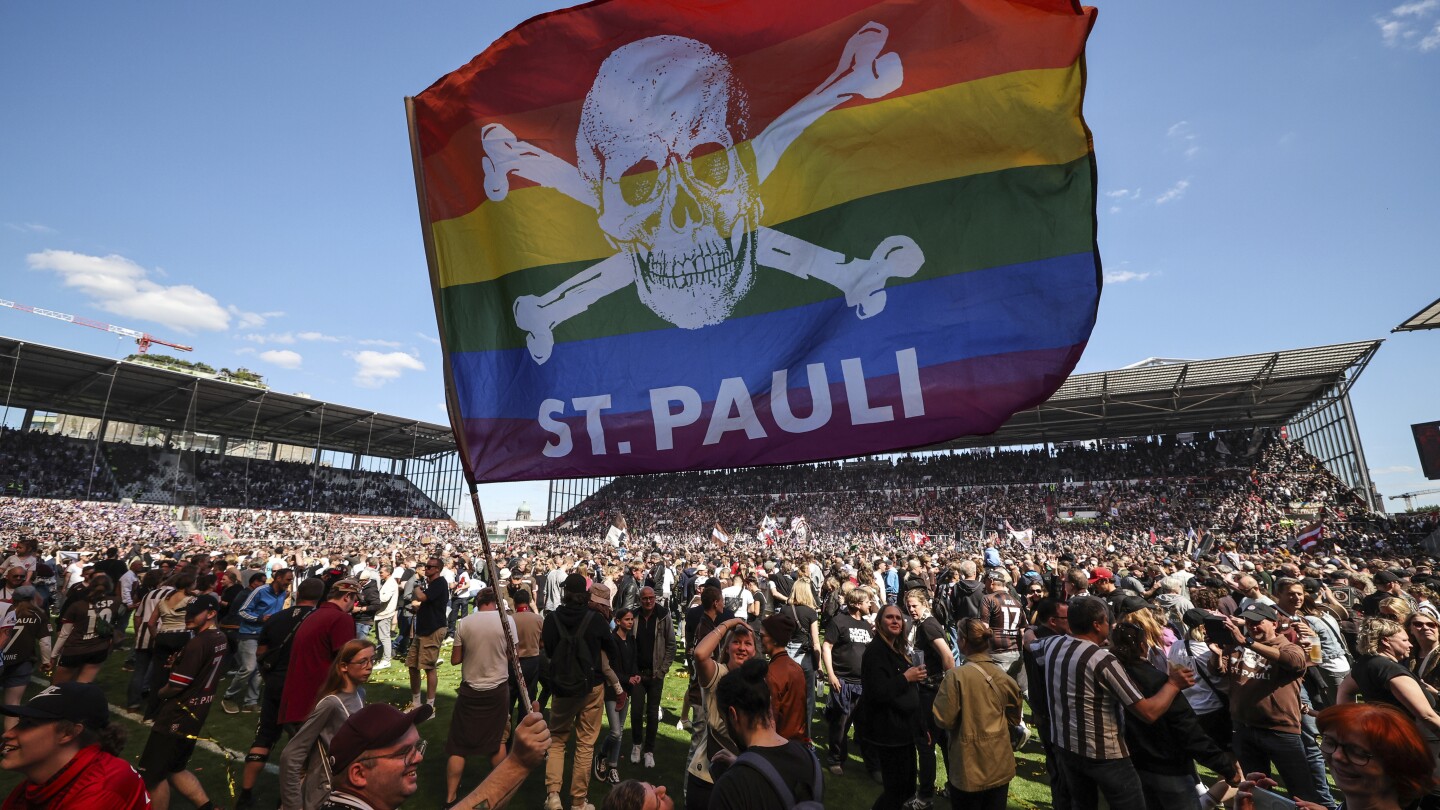
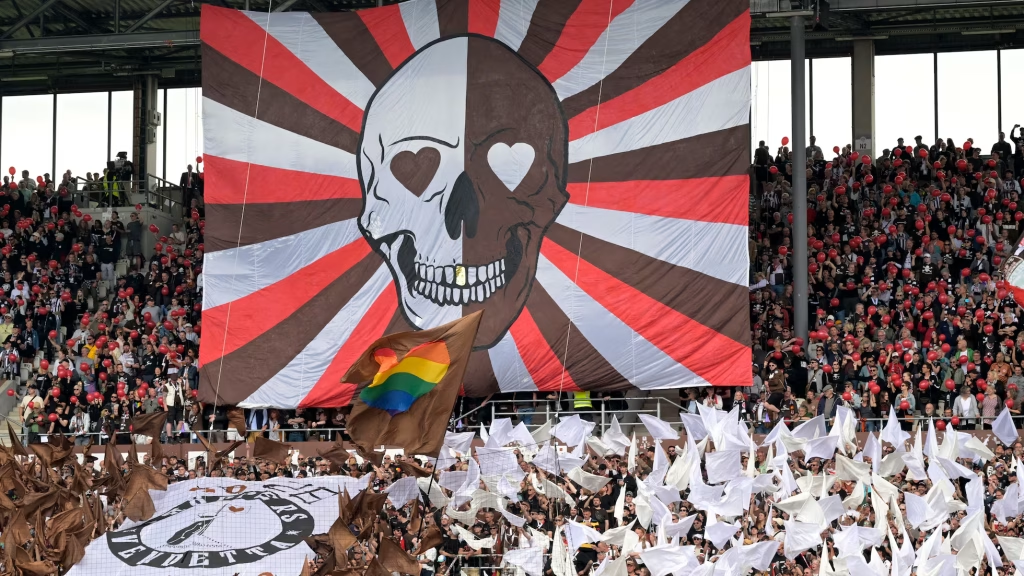
Before FC St. Pauli became a global shorthand for left-wing identity, anti-fascist banners, and skull-and-crossbones iconography, it was something far less mythologised: a small, inconsistent football club trying to survive in the shadow of Hamburg’s giants. Its story before the politics is not one of rebellion or symbolism, but of geography, neglect, and competitive obscurity.
The politics did not arrive first. Circumstance did.
Born beside the docks
Founded in 1910, FC St. Pauli took its name from the working-class district that surrounded the Millerntor-Stadion. The area was defined by the harbour, warehouses, sailors, and transience. Unlike suburban or factory-backed clubs elsewhere in Germany, St. Pauli had no clear industrial patron and no stable middle-class support base.
Football here was informal, secondary, almost provisional. The club existed, but rarely dominated attention in a city where Hamburger SV quickly established itself as the sporting authority.
Overshadowed by HSV
For most of the 20th century, football in Hamburg meant HSV. League titles, international recognition, and national team players flowed almost exclusively through the Volksparkstadion. St. Pauli were peripheral, occasionally competitive, often struggling.
When the Bundesliga was formed in 1963, HSV were included without debate. St. Pauli were not. They remained outside the elite, drifting through the Regionalliga Nord and later the 2. Bundesliga, occasionally rising, usually falling.
There was no ideological rivalry yet. Only hierarchy.
A club of instability
St. Pauli’s pre-political identity was defined by instability. Promotions were followed by immediate relegations. Financial crises were recurring. Training facilities lagged behind regional competitors like Werder Bremen and Eintracht Braunschweig.
The club relied heavily on local players and short-term solutions. Youth development existed, but without the infrastructure enjoyed by better-funded sides. Survival, not ambition, shaped decision-making.
This constant precarity would later become part of the club’s self-image, but at the time it was simply exhausting.
The Millerntor as an open space
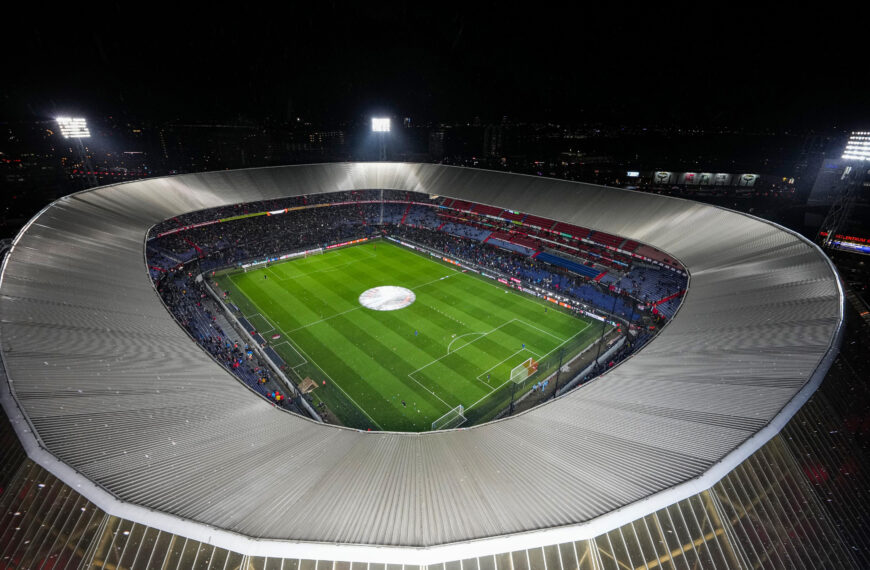
The Millerntor-Stadion itself played an unintentional role in shaping what St. Pauli would become. Located in the heart of the district rather than on its outskirts, it was porous and accessible. Matches blended into the surrounding nightlife, bars, and streets.
Supporters did not arrive en masse from suburban rail lines. They drifted in locally. Students, dockworkers, artists, and casual onlookers mixed freely. The stadium did not impose order; it absorbed its environment.
Long before politics entered the terraces, the space allowed difference to exist.
Support without identity
Up until the late 1970s, St. Pauli support lacked a unifying culture. There were no symbols, no colours with meaning beyond football, no slogans. Attendance fluctuated wildly depending on results. Success briefly attracted crowds; failure emptied the stands.
This absence of identity was crucial. It left room.
Where clubs with strong traditions resisted change, St. Pauli remained malleable. Nothing was being defended yet.
German football before activism
German football culture in the post-war decades was conservative by default. Stadiums reflected social norms rather than challenged them. Politics stayed outside the gates. Support was tribal, not ideological.
At clubs like Borussia Dortmund, Schalke 04, and Bayern Munich, identity revolved around region, class, or success. St. Pauli lacked all three at scale.
It was not a protest club. It was an overlooked one.
The late 1970s turning point
By the end of the 1970s, St. Pauli’s footballing situation worsened further. Relegation battles became routine. Financial uncertainty deepened. Yet the surrounding district began to change.
The St. Pauli neighbourhood attracted countercultural movements, alternative art scenes, and political activism linked to housing struggles and anti-authoritarian movements. These people did not come because of football. Football simply happened to be there.
The club did not invite politics in. It failed to exclude it.
A vacuum waiting to be filled
When political identity eventually entered the Millerntor terraces in the 1980s, it did so smoothly because nothing stood in its way. There was no dominant supporter tradition to displace. No corporate identity to clash with. No recent success to preserve.
St. Pauli before the politics was a blank canvas shaped by neglect rather than intention.
Why the early years matter
The political St. Pauli story is often told as inevitability. In reality, it was accidental. Without decades of marginality, instability, and openness, the later transformation would not have taken hold.
Understanding FC St. Pauli before the politics is not about stripping meaning away from the club’s modern identity. It is about recognising that ideology arrived not at a strong institution, but at a fragile one.
The politics did not build the club. The club’s weakness made space for the politics.

 By
By