
A club shaped by hierarchy
Ferencvárosi Torna Club did not simply become Hungary’s most successful football institution by winning matches. Its dominance emerged from a league order that no longer exists, shaped by Budapest’s gravity, political patronage, and a domestic structure that once concentrated talent in a few favoured places. To understand Ferencváros is to understand how Hungarian football used to function — and why it cannot function that way anymore.
For much of the twentieth century, Hungary did not have a balanced national league in the modern sense. It had a hierarchy. Ferencváros stood near the top of it, not only because of sporting excellence, but because the system itself reinforced their position.
Budapest as the centre
Hungarian football was born in Budapest and never truly left it. While clubs like MTK, Újpest, Honvéd, and Ferencváros all developed distinct identities, they shared the same geographical advantage. The capital concentrated population, infrastructure, industry, and political attention. Provincial clubs were participants, but rarely equals.
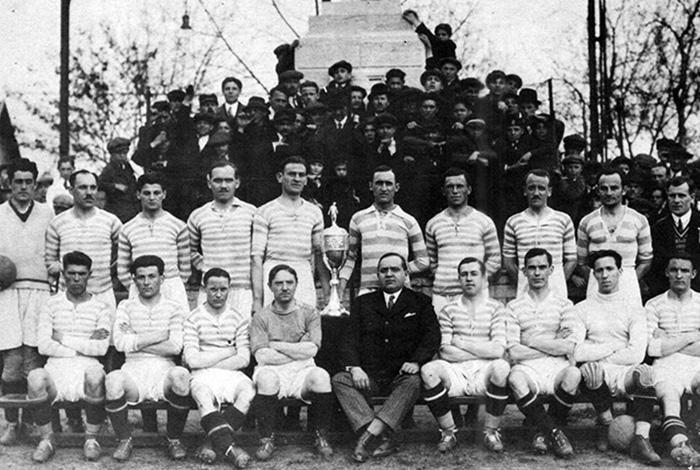
Ferencváros, founded in 1899, benefited from this environment early. The club represented the working-class districts of southern Pest, drawing support from railway workers, dock labourers, and small trades. This social base mattered. Football in Hungary was not just competition; it was representation. Ferencváros became a symbol of popular identity in a city increasingly divided by class and politics.
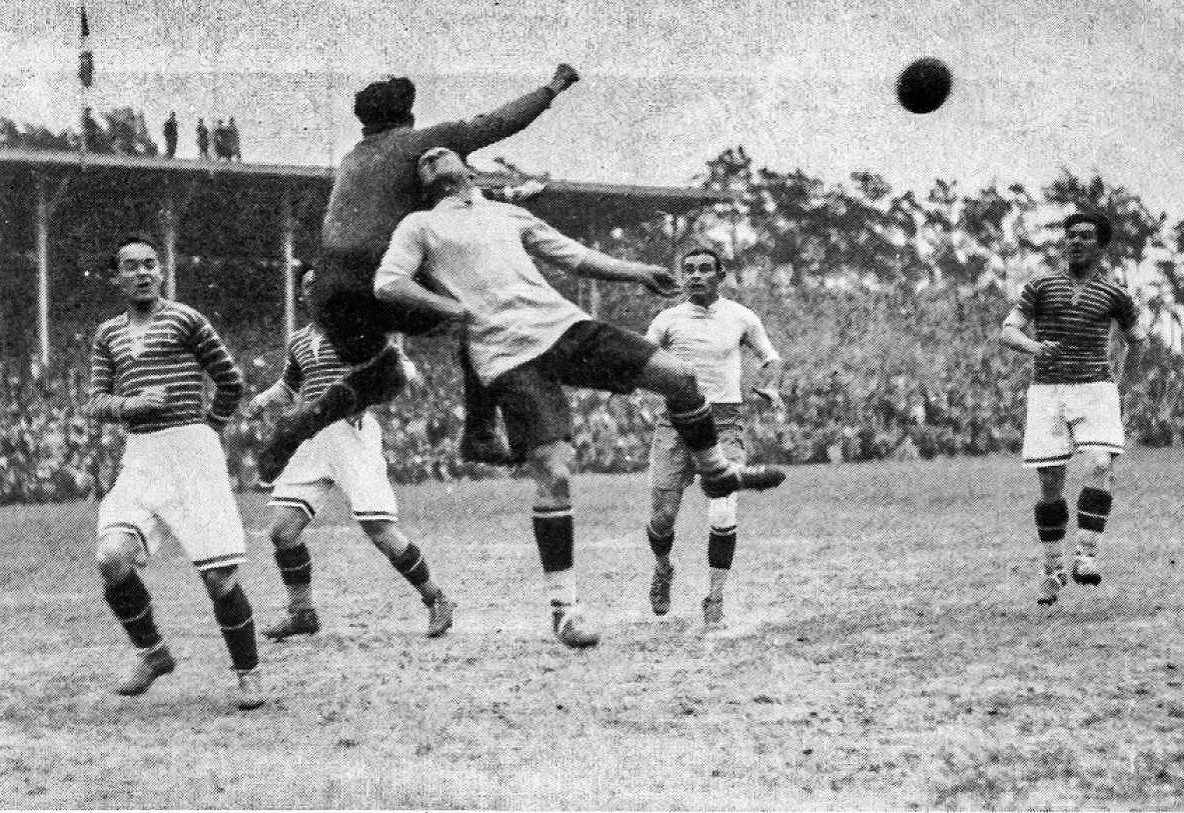
By the 1910s and 1920s, the Hungarian league already displayed a familiar pattern. Championships circulated within Budapest. Ferencváros won titles not only through strength on the pitch, but through access to the best players, coaches, and training conditions. The league’s structure allowed this concentration to persist.
Professionalism without equality
Hungary formally adopted professionalism in 1926, earlier than many European countries. On paper, this modernised the game. In reality, it hardened existing inequalities. Budapest clubs could pay wages, attract talent, and absorb financial shocks. Provincial sides struggled to keep players once they showed promise.
Ferencváros thrived in this environment. The club’s recruitment network extended across Hungary’s towns and villages, drawing in players who saw Budapest as the only viable path to a football career. The league was national in name, but centralised in practice.
During this period, Ferencváros regularly competed in the Mitropa Cup, Central Europe’s elite club competition. Success there reinforced domestic prestige. European recognition fed back into local authority. Winning abroad made dominance at home feel inevitable.
The Hungarian league order was stable because it was self-reinforcing. Clubs like Ferencváros were not just successful; they were structurally protected.
State football and selective support
After the second world war, Hungarian football entered a new phase, but the hierarchy remained. Under socialist rule, clubs were reorganised according to state institutions. Honvéd became the army team. MTK was aligned with the secret police. Ferencváros, lacking a clear institutional patron, initially suffered.
In the early 1950s, Ferencváros was even renamed Kinizsi, stripped of its traditional identity. Yet even during this period of marginalisation, the club did not disappear. Its support remained vast. Its cultural weight endured.
By the late 1950s and 1960s, Ferencváros re-emerged as a dominant force. While Honvéd supplied the Golden Team of the national side, Ferencváros reclaimed domestic authority. The league still favoured Budapest, and the state was content to maintain a familiar balance.
Ferencváros’ 1965 Inter-Cities Fairs Cup victory was not an accident. It reflected decades of accumulated advantage: facilities, experience, continental exposure, and institutional knowledge. The Hungarian league still functioned as a pyramid with a narrow summit.
Provincial resistance and its limits
There were challengers. Clubs like Videoton, Diósgyőr, and Rába ETO Győr enjoyed moments of prominence, particularly in the 1970s and 1980s. These successes, however, were episodic. They did not alter the underlying order.
The league’s structure offered little long-term protection for provincial breakthroughs. Financial support fluctuated. Political priorities shifted. Once momentum faded, players were lost, and success evaporated.
Ferencváros, by contrast, could absorb lean years. The club’s support base guaranteed relevance even when trophies were scarce. In a system without revenue sharing, without robust youth compensation, and without strong regional leagues, size mattered more than form.
Hungarian football rewarded permanence, not disruption.
The collapse of the old system
The fall of socialism did not democratise Hungarian football. It destabilised it. State funding disappeared. Clubs were forced into private ownership without regulatory protection. Many collapsed. Ferencváros survived, but the league order that sustained it did not.
Foreign leagues became accessible. Talented players left earlier and faster. Television money fragmented attention. Budapest’s advantage shrank as infrastructure declined and investment scattered unevenly.
Ferencváros remained Hungary’s most successful club, but its dominance changed in character. It became less structural and more cyclical. Titles were won, but authority was no longer automatic.
The old league order — hierarchical, centralised, predictable — had been replaced by something more volatile and less coherent.
What was lost, and what remains
The disappearance of Hungary’s old league order was not purely negative. It removed rigid hierarchies and allowed new centres to emerge. Yet it also exposed how little had been built beneath the surface.
Ferencváros was a product of its environment. Its history cannot be separated from a system that favoured continuity over competition. That system no longer exists, and Hungarian football has struggled to replace it with something sustainable.
What remains is memory. Packed terraces at Üllői út. Generations who inherited allegiance rather than choosing it. A club that still carries the weight of a league order long gone.
Ferencváros continues to win. But it does so in a country whose football no longer knows what balance looks like.

 By
By