
Introduction
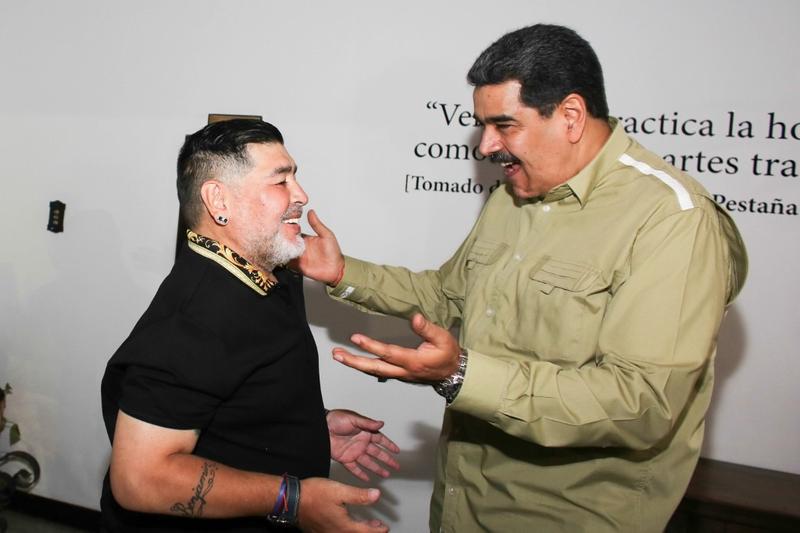
For most of its history, Venezuela’s national team lived on the margins of South American football. La Vinotinto were outsiders in a confederation dominated by Brazil, Argentina, and Uruguay, better known for baseball than for the global game. But over the past decade, as Venezuela’s political crisis deepened under Nicolás Maduro, the national team has taken on a role that goes far beyond sport. Selection decisions, coaching appointments, funding priorities, and even match narratives have increasingly reflected the realities of power, symbolism, and survival in modern Venezuela.
This is not a story of a dictator picking the starting XI. It is subtler, and in many ways more revealing: a national team shaped by political pressure, institutional fragility, and the need to project stability in a country defined by uncertainty.
La Vinotinto as a national symbol
Under Nicolás Maduro, national symbols matter deeply. With hyperinflation, emigration, and social unrest dominating daily life, football has become one of the few arenas where the state can still project unity. La Vinotinto’s maroon shirt, once a niche curiosity in CONMEBOL, has been promoted as a symbol of resilience and national pride.
Victories — even friendly wins — are routinely amplified by state media. Draws against Argentina or Brazil are framed as proof that Venezuela is “standing tall” internationally. In this environment, the national team is not just representing a football federation; it is representing the country’s political narrative abroad.
That symbolic importance inevitably shapes decisions behind the scenes.
The federation under political gravity
The Venezuelan Football Federation (FVF) has long struggled with governance issues, corruption scandals, and financial instability. Under Maduro’s presidency, this weakness has made the federation especially vulnerable to political influence.
While the FVF remains officially autonomous, its dependence on state-controlled infrastructure, travel permissions, and occasional funding creates an implicit pressure to align with government expectations. Stadium access, security arrangements, and international logistics all pass through state hands.
As a result, decisions about coaches, scheduling, and even public messaging often reflect caution. Controversial figures are avoided. Appointments tend to favour stability and loyalty over radical reform, especially when the national team is one of the few institutions still visible on the international stage.
Coaching appointments and political timing
One of the clearest areas where politics and football intersect is in coaching changes. The timing of appointments and dismissals has often coincided with broader political moments.
High-profile coaching upheavals have frequently followed poor results in World Cup qualifying, moments when public morale was already low. Conversely, periods of relative stability — even without major success — have been extended when the government needed continuity rather than controversy.
Rafael Dudamel’s tenure is instructive. A former national team goalkeeper, Dudamel was a unifying figure who spoke carefully, avoided overt political commentary, and embraced the idea of collective sacrifice. His public image aligned neatly with official narratives of endurance and unity, making him a safe choice during turbulent years.
When successors arrived, they inherited not just tactical challenges, but the expectation that the national team should never become a source of political embarrassment.
Player selection in a divided diaspora
Perhaps the most sensitive area is player selection. Venezuela has experienced one of the largest emigration waves in modern Latin American history, with millions leaving the country. This diaspora includes footballers, many of whom developed abroad in Colombia, Spain, Italy, and the United States.
Selecting players who built their careers overseas brings sporting benefits, but also political complications. Some players have spoken openly about conditions in Venezuela; others have family members still living there. Maintaining a squad that avoids public dissent has quietly become a consideration.
There is no evidence of systematic exclusion, but there is a noticeable preference for players who remain publicly neutral. Those who focus on football and avoid political statements are more likely to be embraced as representatives of the nation.
La Vinotinto, under Maduro, must be competitive — but also controlled.
Infrastructure, funding, and visibility
Investment in football infrastructure has been uneven. While grassroots facilities have deteriorated, resources are often concentrated around the national team. Training camps, national stadium renovations, and youth tournaments tied to La Vinotinto receive disproportionate attention.
This is not accidental. The national team offers international visibility. A Copa América campaign or a World Cup qualifier broadcast across South America provides exposure that domestic league football cannot.
Clubs like Caracas FC, Deportivo Táchira, and Zamora FC operate in increasingly difficult conditions, while La Vinotinto remains the public face of Venezuelan football — and, by extension, the state itself.
World Cup qualifying as political theatre
World Cup qualifiers have become moments of national theatre. Matches against Colombia, Brazil, and Argentina are framed as symbolic confrontations, not just sporting contests. Security arrangements are heavy. Media narratives are carefully managed.
A respectable performance — even without qualification — is enough to generate headlines about dignity, resistance, and national pride. Failure, meanwhile, is often softened through messaging about youth development, future cycles, and external obstacles.
In this sense, La Vinotinto’s results matter less than its existence as a functioning, competitive institution. Simply turning up, competing, and avoiding scandal serves a political purpose.
Limits of control
Despite all this, the government’s influence has limits. Footballers still miss chances. Coaches still make tactical errors. Results remain inconsistent. La Vinotinto have never qualified for a World Cup, and no amount of political framing can change that reality.
But perhaps that is precisely why the team is useful. Hope can be postponed. Progress can always be promised. The next generation, the next cycle, the next qualifying campaign.
Under Nicolás Maduro, La Vinotinto is not shaped by direct orders, but by a system in which football exists under constant political gravity — pulled subtly toward caution, symbolism, and survival.
Conclusion
La Vinotinto today is neither a propaganda machine nor an independent sporting body untouched by politics. It exists somewhere in between. Its decisions reflect a country where every national institution must navigate power carefully.
Understanding how Nicolás Maduro shapes La Vinotinto is not about conspiracy, but context. In modern Venezuela, football does not escape politics. It absorbs it, reflects it, and carries it onto the pitch in maroon.

 By
By