
A genius shaped elsewhere
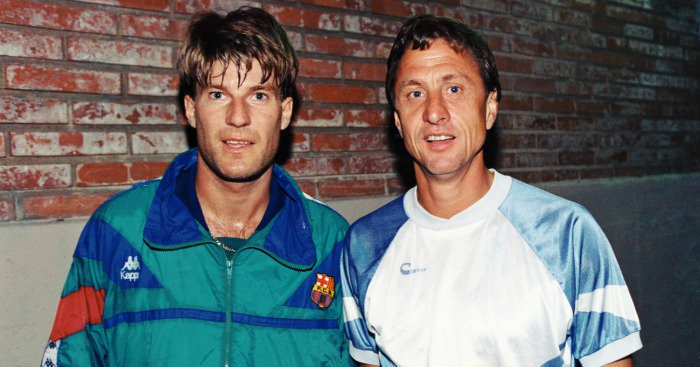
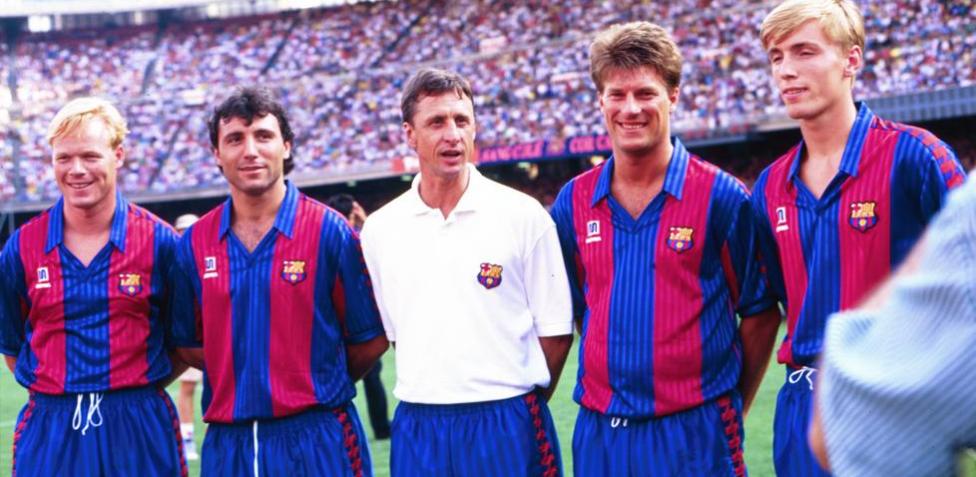
Michael Laudrup’s career is often framed through one decisive relationship: Johan Cruyff. At FC Barcelona, Cruyff’s ideas, authority, and aesthetic gave Laudrup a platform that defined how he is remembered. Yet Laudrup did not begin there, nor was his football intelligence born inside Cruyff’s orbit. Before Barcelona — and beyond it — Laudrup was already a fully formed player, shaped by different coaches, leagues, and expectations.
To understand Laudrup without Cruyff is not to diminish Barcelona’s influence, but to restore balance to a career that existed long before and long after one managerial figure.
A Copenhagen education
Born in 1964, Michael Laudrup emerged from KB (Kjøbenhavns Boldklub), Denmark’s oldest club. His father, Finn Laudrup, had been a Danish international, but Michael’s technical gifts quickly surpassed inherited reputation. Danish football in the late 1970s and early 1980s was still semi-professional, tactically conservative, and physically demanding.
At KB, Laudrup learned control in tight spaces, not ideology. Training emphasised ball retention and patience rather than positional philosophy. Matches were scrappy, weathered, and unforgiving. This environment did not produce a Barcelona-style playmaker — it produced a survivor with exceptional technique.
Italy before Spain
In 1983, Laudrup moved to Lazio, then in Serie B. This period is often overlooked, but it mattered enormously. Italian football in the early 1980s was ruthless tactically. Space was restricted. Creativity was permitted only if it could survive pressure.
Laudrup struggled initially, adapting to defensive systems and slower tempo. But he learned when to disappear, when to conserve energy, and when to strike. This was not Cruyffian freedom. It was calculation.
A subsequent loan to Juventus exposed him to a different kind of structure — elite, disciplined, and uncompromising. Playing alongside Michel Platini, Laudrup absorbed spatial awareness from observation rather than instruction. He was not central yet, but he was learning how top-level teams functioned.
The Juventus paradox
At Juventus, Laudrup was part of a winning environment but rarely the focal point. Platini dominated creative responsibility. Roles were fixed. Risk was limited. Laudrup won titles, but not autonomy.
This period revealed a key truth: Laudrup did not require expressive freedom to function, but he did require trust. Without it, he became efficient rather than transcendent.
Cruyff would later provide that trust — but he was not the first to recognise Laudrup’s intelligence.
Denmark without dogma
Internationally, Laudrup flourished with Denmark under Sepp Piontek. The Danish national team of the 1980s — featuring Preben Elkjær, Søren Lerby, and Morten Olsen — played expressive football without rigid positional ideology.
This was not Total Football in the Dutch sense. It was instinctive, emotional, occasionally chaotic. Laudrup operated between lines, drifting rather than anchoring. His performances at Euro 1984 and the 1986 World Cup established him as one of Europe’s most gifted playmakers before he ever played for Cruyff.
Denmark, not Barcelona, first showed what Laudrup could be when a team bent around him.
Barcelona, but not only Cruyff
When Laudrup joined Barcelona in 1989, Cruyff provided structure, status, and continuity. The partnership worked brilliantly. Laudrup thrived in a system that valued intelligence over intensity, movement over confrontation.
But Cruyff did not invent Laudrup’s vision. He organised it.
Importantly, Laudrup’s best Barcelona seasons coincided with freedom from defensive responsibility. He was trusted to choose moments rather than manufacture them constantly. That trust could have come from another manager — few were willing to offer it.
Real Madrid and self-definition
Laudrup’s move to Real Madrid in 1994 is often framed as betrayal. In reality, it was self-definition. At Madrid, under coaches like Jorge Valdano, Laudrup was no longer protected by ideology. He was judged by results.
In his first season, Madrid dismantled Barcelona 5–0 at the Bernabéu. Laudrup orchestrated the match. There was no Cruyff on the sideline, no philosophical narrative to lean on. Only performance.
This period proved that Laudrup’s intelligence translated beyond systems. He adapted to a more direct league, heavier pressure, and less tolerance for abstraction.
Later years, same clarity
At Vissel Kobe in Japan and later in international football, Laudrup retained the same qualities: economy of movement, minimal touches, maximal effect. Even as physical decline set in, his decision-making remained elite.
He did not require ideological reinforcement to function. His football was internal.
Why separating Laudrup from Cruyff matters
Cruyff elevated Laudrup’s legacy, but he did not create it. Laudrup existed before Barcelona, and he succeeded after leaving it. Reducing his career to a single partnership diminishes the adaptability that defined him.
Michael Laudrup was not a system player. He was a system-compatible genius — capable of thriving under philosophy, pragmatism, and pressure alike.
Without Cruyff, Laudrup was still Michael Laudrup.

 By
By