
A career without the highest call
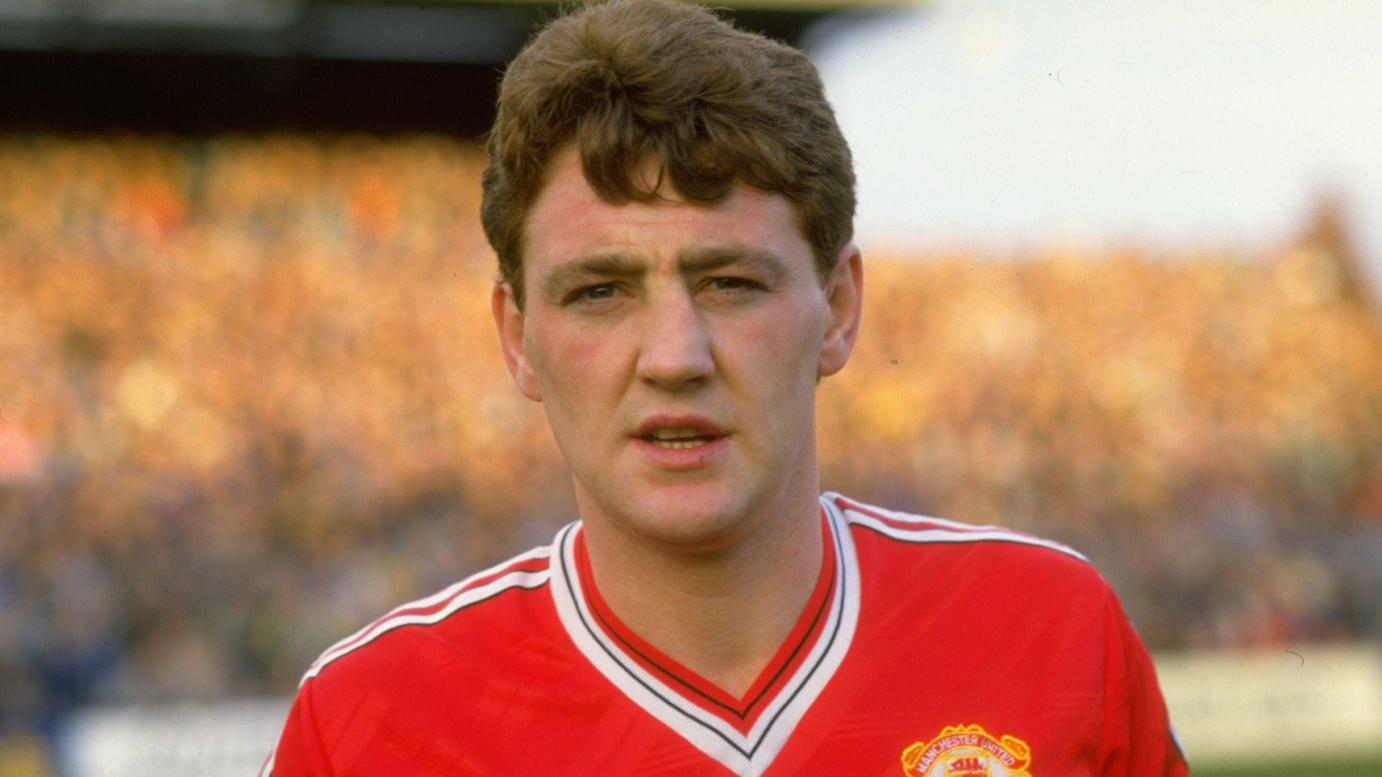
In English football, international caps are often treated as validation. They appear in biographies, shape legacies, and quietly determine how careers are remembered. Yet some players slip through the system entirely, leaving behind a body of work that stands in stark contrast to the absence of international recognition. Steve Bruce is the most persistent example.
Across the 1980s and early 1990s, Bruce was one of the most reliable central defenders in the English game. He won league titles, captained one of the country’s dominant clubs, and became a defining figure of his era at Manchester United. And yet, despite repeated call-ups to squads and years of consistency, he never played a single senior match for England.
From Corbridge to the First Division
Steve Bruce’s route to the top was not direct. Born in Corbridge, Northumberland, he began his professional career at Gillingham in the Third Division after being released by several larger clubs. English football in the early 1980s was unforgiving to defenders who did not arrive with pedigree or polish, and Bruce’s early years were shaped by physical leagues, uneven pitches, and limited attention.
At Gillingham and later Norwich City, Bruce established a reputation for resilience and positional intelligence rather than elegance. He was not fashionable. He did not fit the romantic image of the English centre-half, nor the emerging continental ideal. What he offered instead was dependability, aerial dominance, and an unusual knack for goals.
Manchester United and authority
Bruce joined Manchester United in 1987, at a moment when the club was rebuilding its identity under Alex Ferguson. Old Trafford was not yet the global institution it would become. Success was uncertain. Authority had to be re-established from the back.
Alongside Gary Pallister, Bruce formed a central defensive partnership that defined United’s resurgence. Between 1993 and 1997, Manchester United won three Premier League titles, two FA Cups, and a League Cup. Bruce captained the side during critical periods, often in the absence of Bryan Robson, and became a stabilising presence during Ferguson’s most formative years.
His contribution was not subtle. Bruce scored goals from defence at an extraordinary rate, including crucial strikes during title races. The image of him celebrating late winners in red remains fixed in Premier League memory. Yet while club success mounted, England recognition did not follow.
England’s crowded defence
The late 1980s and early 1990s were an awkward period for England defensively. International selectors prioritised familiarity, perceived class, and stylistic balance. Players like Terry Butcher, Des Walker, Mark Wright, and later Tony Adams occupied the centre-back roles, often selected for specific tournament needs rather than club form.
Bruce was called into England squads several times, notably under Bobby Robson, but he never made the matchday breakthrough. His club performances were sometimes dismissed as system-dependent, benefiting from Manchester United’s structure rather than individual brilliance.
This argument ignored context. Bruce played through tactical transitions, European re-entry, and evolving physical demands. He adapted without ceremony. But international football rarely rewards adaptability without glamour.
Style versus reputation
Bruce’s style did not translate easily into highlights. He was positionally disciplined rather than dramatic. He cleared danger early. He organised lines rather than chased headlines. In an era before widespread television analysis, this mattered.
International football, particularly tournament football, favoured defenders whose attributes were immediately visible. Pace, recovery tackles, last-ditch interventions. Bruce’s best work often prevented those situations from arising at all.
At club level, this was invaluable. At international level, it was invisible.
The problem of timing
Timing matters as much as talent. Bruce’s peak coincided with England’s cautious tactical approach and an instinctive preference for continuity. Once a central partnership was trusted, it was rarely disrupted.
By the time Bruce’s leadership at Manchester United became undeniable, England were already preparing for transition. Younger defenders emerged. Tournament cycles closed. Opportunity narrowed.
Bruce was never dropped from England. He was simply never chosen.
Comparison and silence
Other uncapped players are often mentioned alongside Bruce, but few combine longevity, success, and influence in the same way. Unlike players whose careers were limited by injury or geography, Bruce’s absence feels systemic.
He captained a title-winning side in the Premier League’s formative years. He was trusted by one of the most demanding managers in English football. He played European matches under pressure and delivered consistently.
England’s silence was not the result of one decision, but of many small hesitations.
Legacy without validation
Bruce’s later career as a manager has complicated his playing legacy. His defensive authority as a player is sometimes overshadowed by assessments of his managerial style. This is unfair, but common in football memory.
As a player, Bruce represented a type that English football has quietly relied upon for decades: the organiser who does not advertise himself, the leader who speaks through positioning rather than rhetoric.
International caps would not have changed his contribution. But they would have changed how history records it.
What uncapped really means
To be uncapped is not to be unqualified. It is to exist outside a narrow system of recognition. Bruce’s career exposes the limits of international selection as a measure of excellence.
Football history is full of such gaps. Players whose influence was decisive, yet officially unacknowledged. Bruce remains the clearest English example of how a career can be complete, authoritative, and successful — without ever being validated by the international game.

 By
By