
A peak without decline
Yugoslav football did not decline. It ended. This distinction matters, because decline suggests inevitability. Yugoslavia’s disappearance from international football was not the result of tactical stagnation, poor governance, or generational failure. It was political, abrupt, and entirely external to the game itself. At the very moment Yugoslavia appeared ready to fulfil its long-promised potential, the country that sustained it ceased to exist.
By the late 1980s, Yugoslavia possessed every element required to dominate international football. Technical development was among the best in Europe. Youth systems were producing intelligent, adaptable players comfortable in multiple roles. The domestic league remained competitive, tactically diverse, and deeply rooted in local identity. Unlike many nations of similar size, Yugoslavia did not rely on a single golden generation. Talent emerged continuously, shaped by a footballing culture that valued improvisation as much as discipline.
The tragedy of Yugoslav football is not what it failed to achieve. It is what it was about to become.
Foundations of a footballing culture
Football in Yugoslavia grew differently from that of its Western neighbours. Shaped by post-war reconstruction and socialist ideology, clubs were closely tied to factories, institutions, and regional pride. This produced a system that emphasised collective identity without suppressing individuality. Players were encouraged to express themselves, but always within a tactical framework that demanded intelligence and responsibility.
The Yugoslav First League was one of Europe’s most technically gifted competitions. Matches were often open, unpredictable, and tactically fluid. Coaches expected players to read the game rather than follow rigid instructions. Midfielders were trained to dictate tempo. Defenders were comfortable on the ball. Forwards were judged not only on goals, but on creativity and movement.
This environment produced footballers who adapted easily to foreign leagues. When Yugoslav players began moving abroad in greater numbers during the 1980s, they thrived. Their success was not accidental. It was the natural outcome of a system that produced complete footballers rather than specialists.
A generation coming together
By the end of the 1980s, the Yugoslav national team was beginning to reflect the depth of its domestic talent. The squad that qualified for Euro 1992 was among the most balanced in Europe. It combined technical midfielders, physically dominant defenders, and forwards capable of both structure and improvisation.
At youth level, Yugoslavia was already dominant. The under-20 team won the 1987 World Youth Championship in Chile, defeating West Germany in the final. That squad included players who would later define European football, including Robert Prosinečki, Zvonimir Boban, Davor Šuker, Predrag Mijatović, and Dejan Savićević. They were not merely talented individuals. They understood each other instinctively.
What made this generation unique was its cohesion. Players from different republics combined seamlessly, united by a shared footballing education. Club rivalries existed, but they did not fracture the national team. On the pitch, Yugoslavia functioned as a single organism, capable of controlling matches through possession or breaking them open through individual brilliance.
Politics overtakes football
While Yugoslav football reached maturity, the country itself was fracturing. Economic crisis, rising nationalism, and weakening federal authority began to erode the social fabric that had held the state together. Football, once a unifying force, became another arena in which political tensions surfaced.
The 1990s arrived with warning signs already visible. Stadiums became spaces of confrontation rather than celebration. Matches between major clubs were increasingly defined by hostility, symbolism, and violence. The famous riot at Maksimir Stadium in 1990 was not an isolated incident. It was a public manifestation of a deeper rupture.
Internationally, the consequences were immediate. Yugoslavia qualified for Euro 1992 but was disqualified due to international sanctions. Denmark was invited as a last-minute replacement and went on to win the tournament. The irony was impossible to ignore. A Yugoslav side widely considered capable of winning the competition never played a single match. Denmark’s triumph did not expose Yugoslavia’s weakness. It highlighted its absence.
The lost years
Yugoslavia never received a final chapter. There was no last tournament, no farewell generation, no gradual transition. Players who should have reached their peak together were scattered across newly formed national teams or left without international representation entirely.
The 1994 World Cup passed without Yugoslavia. So did the 1996 European Championship. By the time successor states began establishing themselves independently, the moment had passed. Football does not wait for politics to stabilise. Generations age, form changes, injuries intervene. What might have been a decade of dominance became a fragmented legacy spread across multiple flags.
Yet even in separation, Yugoslavia’s influence remained visible. Serbian, Croatian, Bosnian, Montenegrin, Slovenian, and Macedonian players continued to shape European football. They did so using the same technical foundation, tactical intelligence, and adaptability developed within a unified system.
Proof in separation
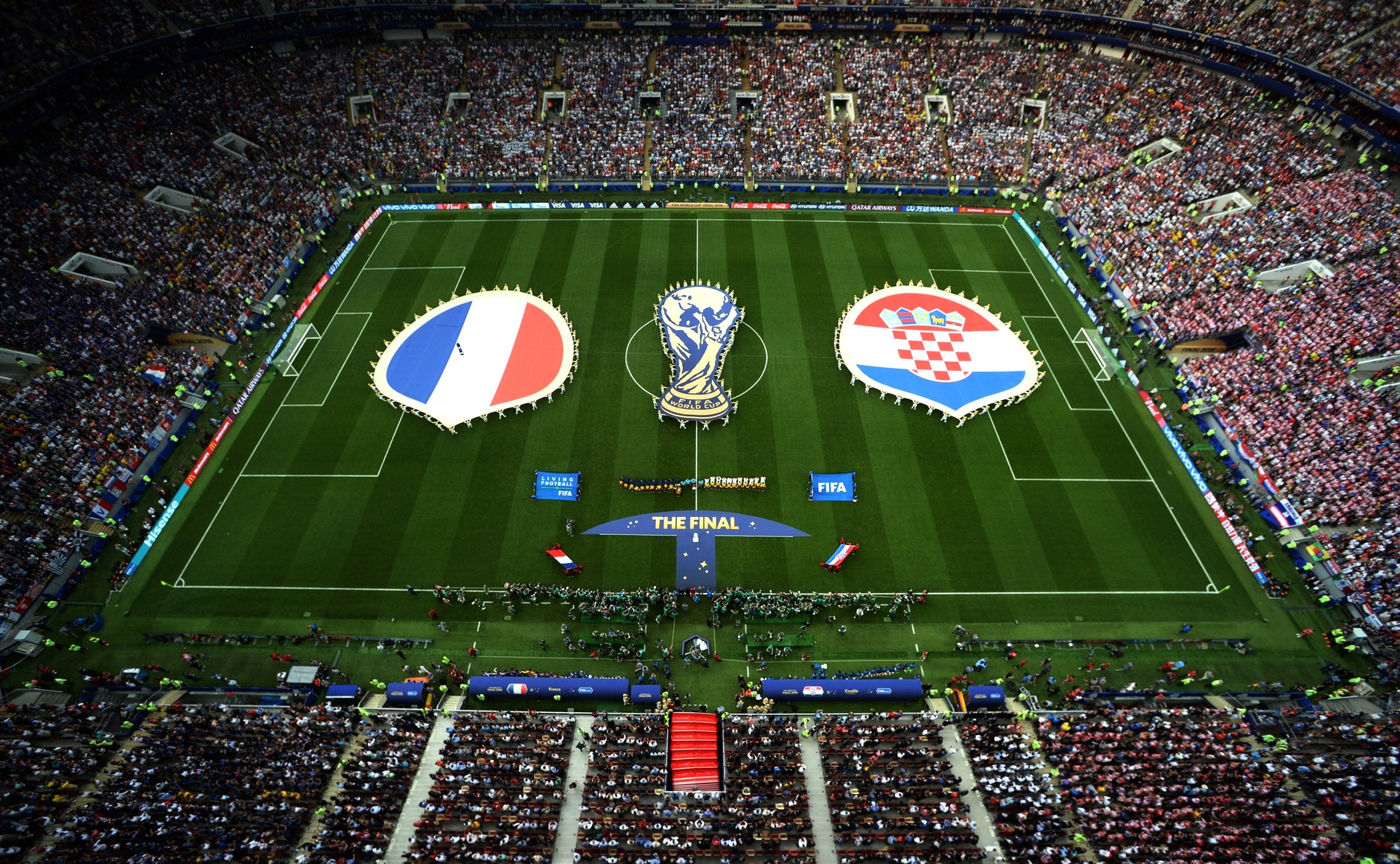
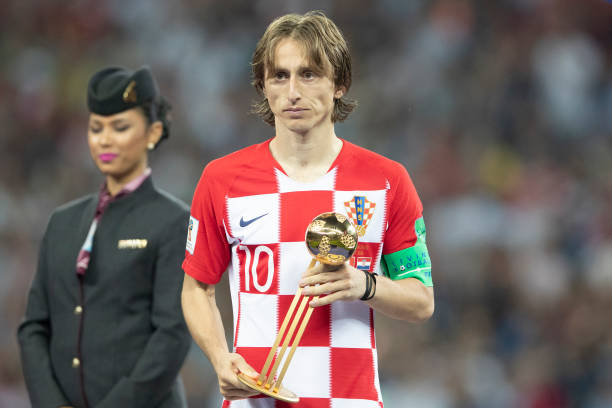
The strongest evidence of what Yugoslavia could have become arrived decades after the country ceased to exist. Croatia’s run to the 2018 World Cup final was built almost entirely on the same footballing foundations Yugoslavia once possessed. Luka Modrić, Ivan Rakitić, Marcelo Brozović, and Ivan Perišić were products of a system that valued technique, intelligence, and adaptability above all else.
Croatia, a nation of just over four million people, eliminated Argentina, England, and Russia to reach the final. They did so through midfield control, tactical discipline, and mental resilience rather than raw athleticism or depth. Yugoslavia would not have fielded a stronger midfield than Croatia did in 2018. The difference is that Yugoslavia would have added Serbian physicality, Bosnian creativity, Montenegrin steel, and Slovenian organisation to an already elite core.
Croatia’s achievement did not diminish Yugoslavia’s legacy. It confirmed it.
The hypothetical team
Speculation about what Yugoslavia might have achieved often descends into fantasy line-ups and imagined finals. While such exercises are tempting, the reality is more sobering. Yugoslavia’s true strength lay not in assembling a single perfect team, but in sustaining elite performance across multiple tournaments.
Had the country remained intact, Yugoslavia would have entered the 1990s as a perennial contender. European Championships would have been realistic targets. World Cup semifinals would not have been exceptional. A major international title was not guaranteed, but neither would it have been surprising.
Crucially, Yugoslavia would have evolved tactically. The country produced thinkers as much as athletes. Coaches and players alike were adaptable, curious, and responsive to change. While other nations struggled to modernise, Yugoslavia would likely have embraced tactical shifts rather than resisted them.
A legacy without a nation
Today, Yugoslavia exists only in memory, archive footage, and the collective imagination of football historians. Its records are frozen in time. Its story is incomplete. Yet its influence persists, not through trophies, but through style.
When Balkan midfielders dominate possession, when defenders play forward passes under pressure, when attackers combine intelligence with improvisation, Yugoslavia’s imprint is visible. The nation may be gone, but its footballing philosophy survives in fragments.
What Yugoslavia could have been will always remain unanswered. That uncertainty is its defining characteristic. It was a footballing power that reached maturity at the exact moment history intervened. Not defeated, not surpassed, but interrupted.
And in that interruption lies the enduring fascination of Yugoslav football

 By
By